Water Bottle Dimensions: Size, Height, and Length (2026)
Water Bottle Dimensions describe the size, height, diameter, and capacity of a water bottle. These measurements help you understand how big or small a bottle is. They also help you choose the right bottle for your daily needs.
The right water bottle can make your day easier. A bottle that fits your bag or cup holder is simple to carry everywhere. Knowing the correct dimensions helps you buy the best bottle without confusion.
Water Bottle Dimensions are different for 500ml, 1-liter, and 2-liter bottles. Each size offers a different amount of water and has different measurements. This guide explains the most common bottle sizes and their dimensions in easy words.
Read this too: Beer Can Dimensions
Standard Water Bottle Dimensions and Sizes
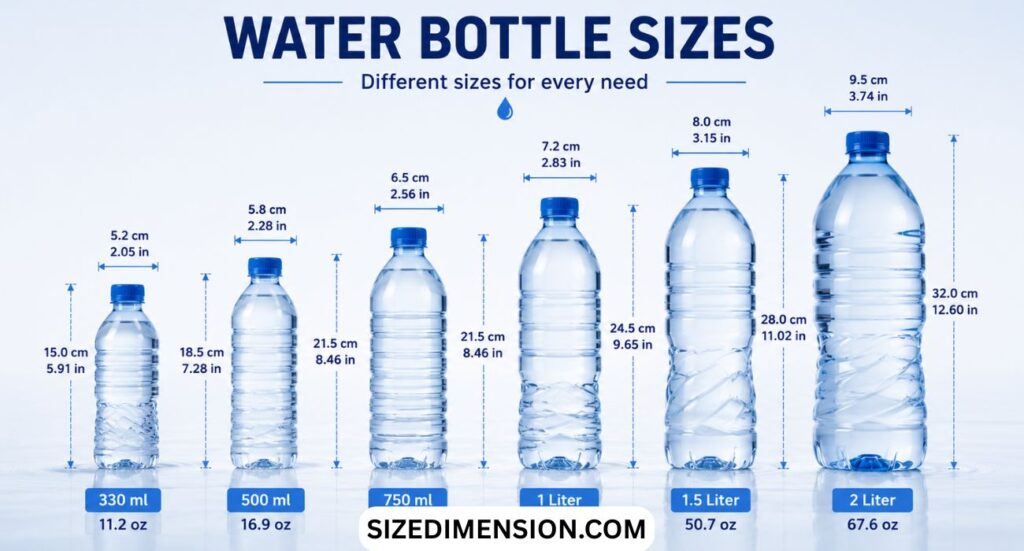
Modern bottles are available in several standard sizes that manufacturers use worldwide. Although exact measurements differ slightly between brands, most bottles follow similar dimensions so they fit common storage spaces and accessories. These standard water bottle dimensions make it easier for consumers to compare products and select the right bottle for their lifestyle.
Smaller bottles are lightweight and portable, making them ideal for children, short walks, or quick errands. Medium-sized bottles provide enough water for daily commuting and office work, while larger bottles are popular among gym users, hikers, and outdoor enthusiasts who need more hydration throughout the day. Understanding these water bottle measurements helps you choose a bottle that balances portability with drinking capacity.
Common Water Bottle Sizes in the USA
The most common water bottle sizes USA range from 8 ounces to 2 liters. The 16.9-ounce (500ml) bottle remains the most popular because it provides enough water for several hours while remaining compact enough to carry comfortably. Larger bottles reduce refill frequency but require more storage space and become heavier when filled.
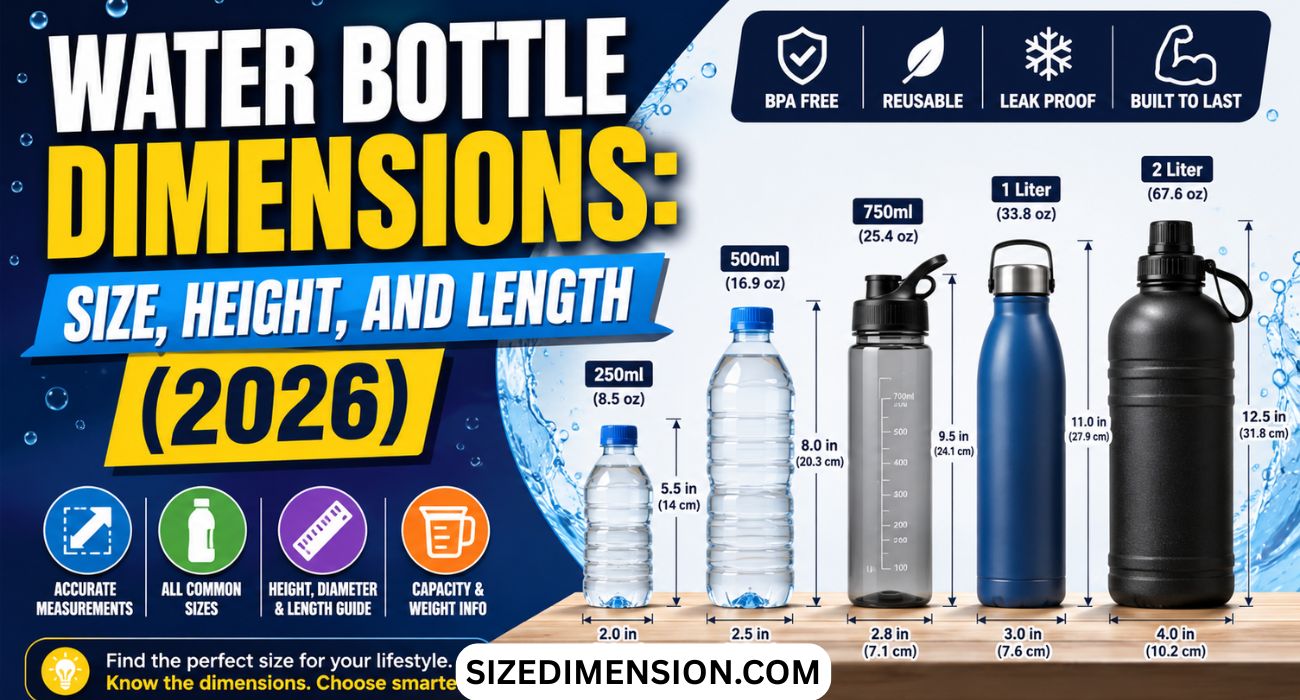
The table below provides a helpful water bottle dimensions chart showing the most common bottle sizes and their approximate measurements.
| Bottle Capacity | Height | Diameter | Typical Use |
| 8 oz (237 ml) | 5.5 in (14 cm) | 2.25 in (5.7 cm) | Kids, travel |
| 12 oz (355 ml) | 7 in (17.8 cm) | 2.5 in (6.4 cm) | School, lunch |
| 16.9 oz (500 ml) | 8 in (20.3 cm) | 2.5 in (6.4 cm) | Daily hydration |
| 20 oz (591 ml) | 8.9 in (22.6 cm) | 2.75 in (7 cm) | Office, commuting |
| 32 oz (946 ml) | 10.5 in (26.7 cm) | 3.5 in (8.9 cm) | Gym, hiking |
| 1 Liter | 11 in (27.9 cm) | 3 in (7.6 cm) | Fitness, travel |
| 1.5 Liter | 12.25 in (31.1 cm) | 3.5 in (8.9 cm) | Outdoor activities |
| 2 Liter | 12.5 in (31.8 cm) | 4 in (10.2 cm) | Long trips, home |
These measurements represent average industry standards. Different manufacturers may vary slightly depending on bottle shape, wall thickness, insulation, and material.
Bottle Size Specifications
Understanding bottle size specifications allows buyers to compare bottles more accurately than simply looking at capacity. Manufacturers usually publish water bottle specifications that include the bottle capacity, bottle height, bottle diameter, bottle circumference, bottle opening size, and bottle cap size. These details determine whether a bottle fits inside a vehicle’s cup holder, slides easily into a backpack, or works with bicycle cages and bottle holders.
A bottle’s water bottle diameter is often the most important measurement because many storage spaces have limited width. For example, a slim water bottle usually measures around 2.5 inches across, making it ideal when the bottle fits cup holder compartments in cars and trucks. Larger insulated bottles often exceed 3.5 inches in diameter, requiring wider holders or backpack compartments.
The following table summarizes common bottle dimensions in inches and bottle dimensions in centimeters for easy comparison.
| Capacity | Height (Inches) | Diameter (Inches) | Height (Centimeters) | Diameter (Centimeters) | Cap Size |
| 8 oz | 5.5 | 2.25 | 14 | 5.7 | 28 mm |
| 12 oz | 7 | 2.5 | 17.8 | 6.4 | 28 mm |
| 16.9 oz | 8 | 2.5 | 20.3 | 6.4 | 28 mm |
| 20 oz | 8.9 | 2.75 | 22.6 | 7 | 28 mm |
| 1 Liter | 11 | 3 | 27.9 | 7.6 | 30 mm |
| 1.5 Liter | 12.25 | 3.5 | 31.1 | 8.9 | 30 mm |
| 2 Liter | 12.5 | 4 | 31.8 | 10.2 | 33 mm |
Another important factor is bottle capacity measurement. Capacity tells you how much liquid a bottle can hold, while the external dimensions determine how easy it is to transport. Two bottles may both hold one liter of water, yet one may be tall and narrow while the other is shorter and wider. Shape influences stability, grip, insulation, and compatibility with accessories.
A useful rule is that increasing water bottle capacity generally increases both water bottle height and water bottle width. However, premium bottle manufacturers sometimes use advanced designs that maintain a slim profile while increasing capacity. This is especially common with insulated stainless steel bottles designed for commuters and outdoor users.
Fact: A bottle holding twice as much water does not always become twice as tall. Manufacturers often increase both the height and diameter to improve balance and make the bottle easier to hold.
How Tall Are Different Bottles?
The water bottle height is one of the most important measurements when choosing a bottle for everyday use. A bottle that is too tall may not fit inside your refrigerator shelf, backpack, or gym bag, while one that is too short may not hold enough water for your daily hydration goals. Manufacturers design bottles in different heights according to their bottle capacity, shape, and intended purpose. A taller bottle usually holds more water, but the overall design also affects how comfortable it feels in your hand.
Knowing the standard water bottle height also helps when buying bottle sleeves, insulated carriers, or checking whether a bottle fits inside a vehicle’s cup holder. Although different brands may vary slightly, most bottles follow similar industry measurements, making it easier to compare products before purchasing.
Small Water Bottle Height (8-12 oz)
Small bottles are designed for convenience and portability. The average small water bottle height ranges between 5.5 and 7 inches (14–18 cm) with a diameter of approximately 2.25 to 2.5 inches. These compact bottles are commonly used by children, travelers, and anyone needing a lightweight bottle for short trips.
An 8-ounce bottle is one of the smallest commonly available sizes. It easily fits inside lunch boxes, handbags, and small backpacks. The 12-ounce version offers slightly more hydration while remaining compact enough for everyday carrying. These bottles are popular in schools because they are easy for children to hold with one hand.
Since these bottles contain less water, they remain extremely light even when full. They are also inexpensive and often available as both disposable plastic bottle options and reusable designs. People looking for portion control or lightweight travel bottles frequently choose this size because it balances portability with basic hydration.
Standard Water Bottle Height (16.9-20 oz)
The standard water bottle height for a 16.9 oz water bottle size is approximately 8 inches (20.3 cm). This size has become the industry standard because it fits almost every vehicle cup holder, office desk organizer, and backpack side pocket. Most bottled water sold in supermarkets across the United States uses this size because it offers an excellent balance between portability and water bottle capacity.
The slightly larger 20 oz water bottle dimensions typically measure about 8.9 inches tall with a diameter close to 2.75 inches. This extra capacity provides more hydration without making the bottle significantly larger. Many reusable bottles are designed around these measurements because they are comfortable to carry throughout the day.
This size is ideal for commuting, office work, school, and casual outdoor activities. Many modern BPA-free water bottle designs use these dimensions while adding thicker walls for durability. Stainless steel versions also follow similar measurements, although the internal capacity may vary because of insulation.
A standard-sized bottle is often considered the best choice for daily use because it combines moderate weight with excellent portability. It can easily slide into most bags while remaining comfortable to hold during long walks or workdays.
Large Water Bottle Height (32 oz – 1 Liter)
People who exercise regularly or spend long hours outdoors often choose a large water bottle size to reduce the need for frequent refills. A typical 32 oz water bottle dimensions measurement is around 10.5 inches (26.7 cm) in height with a diameter between 3 and 3.5 inches. Meanwhile, 1 liter water bottle dimensions average about 11 inches (27.9 cm) tall with a diameter close to 3 inches.
These bottles are especially popular in gyms, hiking trails, construction sites, and sports fields because they provide enough water for several hours of activity. Although they are taller than standard bottles, they still fit comfortably inside many hiking backpacks and larger travel bags.
Many premium stainless steel water bottle models are available in this size because users value insulation during extended outdoor use. Double-wall insulation keeps drinks cold for many hours without changing the external dimensions significantly.
One important consideration is weight. A one-liter bottle filled with water weighs more than two pounds, so carrying it throughout the day requires a comfortable grip and a sturdy handle. Manufacturers often include textured surfaces, carrying loops, or ergonomic shapes to improve handling.
Extra Large Water Bottle Height (1.5-2 Liters)
For maximum hydration, many people choose extra large water bottle dimensions ranging from 1.5 to 2 liters. These bottles typically stand between 12 and 12.5 inches (31–32 cm) tall and have diameters ranging from 3.5 to 4 inches.
The 1.5 liter water bottle dimensions provide an excellent compromise between portability and capacity. This size is commonly used during hiking, camping, road trips, and long work shifts where refilling opportunities are limited. The bottle remains manageable while providing enough water for several hours.
The 2 liter water bottle dimensions represent one of the largest commonly available bottle sizes. These bottles hold enough water for nearly an entire day’s hydration, making them popular among athletes and outdoor enthusiasts. However, once filled, they become considerably heavier and may not fit inside standard cup holders or narrow backpack pockets.
Large bottles often include integrated carrying handles, shoulder straps, or textured grips because of their increased filled bottle weight. Their wider base also improves stability when placed on tables or uneven ground.
Water Bottle Length and Diameter Measurements
Besides height, the water bottle diameter plays a major role in determining where a bottle can be stored and how comfortable it feels during use. While people often refer to water bottle length, cylindrical bottles are generally measured by height and diameter instead of length. These measurements determine whether a bottle fits into cup holders, bicycle cages, backpack pockets, and storage compartments.
A bottle with a smaller diameter is usually easier to grip and transport, while a wider bottle often provides greater stability and insulation. Manufacturers carefully balance these dimensions to maximize both comfort and capacity.
Slim vs. Wide Profile Bottles
A slim water bottle usually measures between 2.25 and 2.75 inches in diameter. This narrow profile allows the bottle fits cup holder found in most passenger vehicles, making it a favorite among commuters and travelers. Slim bottles also fit easily into a bike bottle cage, making them popular among cyclists.
In contrast, wider bottles measure approximately 3.5 to 4 inches across. Although they may not fit standard cup holders, they offer better stability and frequently provide improved insulation because thicker walls can be added without reducing internal capacity.
Many modern insulated water bottle designs use a wider profile because the additional insulation layers require extra space. These bottles excel at maintaining beverage temperature for many hours while remaining durable enough for outdoor adventures.
Bottle shape also affects storage. Slim bottles slide easily into narrow side pockets, while wider bottles require larger compartments. Choosing the correct profile depends on where you plan to carry the bottle and how often you need to transport it.
Bottle Opening and Cap Dimensions
The bottle opening size influences how easy a bottle is to drink from, refill, and clean. Smaller bottles commonly use 28 mm bottle cap dimensions, while larger bottles often feature 30 mm or 33 mm bottle cap size options.
A narrow mouth bottle provides better spill resistance and controlled drinking, making it ideal for walking, running, or commuting. Because the opening is smaller, water flows more slowly, reducing accidental spills.
A wide mouth water bottle, on the other hand, makes filling much easier. Ice cubes fit comfortably through the opening, and cleaning the inside of the bottle becomes much simpler. Many hikers and athletes prefer wide-mouth designs because they allow faster refilling from water stations or natural water filters.
Specific Water Bottle Size Dimensions
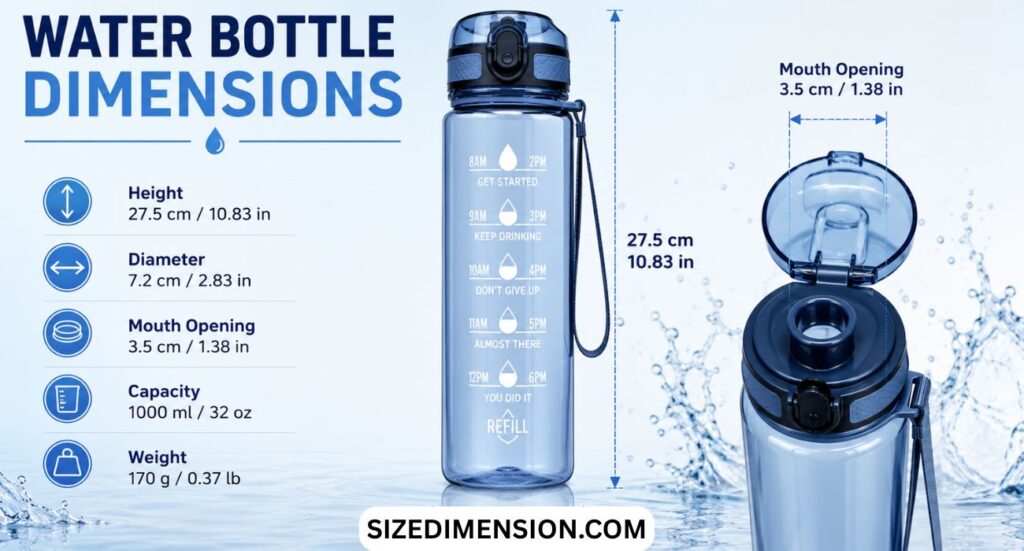
Choosing the correct bottle begins with understanding the measurements of each common size. While manufacturers may make small design changes, most bottles follow similar water bottle dimensions so they remain compatible with cup holders, backpacks, and storage racks. Comparing different sizes also makes it easier to decide whether you need a compact bottle for daily commuting or a larger one for sports and outdoor adventures.
The most common bottle capacities include 500ml, 1 liter, 1.5 liters, and 2 liters. Each offers different benefits depending on your hydration needs. The following sections explain the approximate dimensions, weight, and everyday uses of these popular bottle sizes.
500ml (16.9 oz) Water Bottle Dimensions
The 500ml water bottle dimensions are considered the worldwide standard for bottled drinking water. A typical bottle measures about 8 inches (20.3 cm) tall with a diameter of approximately 2.5 inches (6.4 cm). The 16.9 oz water bottle size is compact enough to fit almost every vehicle cup holder, office desk organizer, and backpack side pocket.
This size is ideal for work, school, travel, and daily errands because it offers enough water for several hours without becoming heavy. A filled 500ml bottle weighs about 1.1 pounds (0.5 kg), making it comfortable for both adults and children to carry.
Many disposable bottles and reusable models share these measurements, although reusable versions often have slightly thicker walls. Whether you choose a plastic, stainless steel, or insulated design, this remains one of the most practical bottle sizes available.
1 Liter Water Bottle Dimensions
The 1 liter water bottle dimensions usually measure around 11 inches (27.9 cm) in height with a diameter of approximately 3 inches (7.6 cm). This capacity equals 33.8 fluid ounces, making it a favorite choice for people who spend long hours away from home.
A one-liter bottle provides enough water for extended workdays, gym sessions, road trips, and outdoor activities. Because of its larger capacity, users refill it less often than smaller bottles, saving both time and effort.
Many premium stainless steel water bottle models are manufactured in this size because they combine generous capacity with excellent temperature retention. When completely full, a one-liter bottle weighs about 2.2 pounds, so many brands include carrying loops or textured grips for better handling.
Read also: Average Living Room Size
1.5 Liter Water Bottle Dimensions
The 1.5 liter water bottle dimensions average approximately 12.25 inches (31.1 cm) in height with a diameter close to 3.5 inches (8.9 cm). This bottle holds about 50.7 fluid ounces, making it suitable for long hikes, camping trips, sporting events, and demanding work environments.
A larger bottle means fewer refills throughout the day. This is especially useful during hot summer weather when water consumption increases. Many hikers and outdoor workers choose this size because it provides several hours of hydration without carrying multiple smaller bottles.
Although larger than standard bottles, many modern designs include ergonomic handles that make transportation easier. Some manufacturers also produce lightweight reusable versions to reduce the overall carrying weight.
2 Liter Water Bottle Dimensions
The 2 liter water bottle dimensions typically measure around 12.5 inches (31.8 cm) tall with a diameter of approximately 4 inches (10.2 cm). This size holds nearly 67.6 fluid ounces, making it one of the largest commonly available bottles for personal hydration.
A two-liter bottle is often selected by athletes, fitness enthusiasts, and people who prefer carrying an entire day’s water supply. Instead of stopping frequently to refill, users can remain focused on their activities while maintaining proper hydration.
The larger dimensions make this bottle less suitable for standard vehicle cup holders, but it works well in larger backpacks or as a desk bottle. Because a full bottle weighs nearly 4.4 pounds before adding the container’s own weight, manufacturers often include sturdy handles or shoulder straps for easier carrying.
Plastic Water Bottle Dimensions
Plastic remains one of the most widely used materials because it is lightweight, affordable, and durable. Water bottle dimensions vary depending on whether the bottle is designed for single use or repeated daily use. Disposable bottles prioritize low weight, while reusable bottles focus on durability and long-term performance.
Modern plastic bottles are available in many different capacities, allowing consumers to choose the right balance between portability and hydration.
Disposable Plastic Bottle Sizes
The most common disposable water bottle size sold in the United States is the 500ml bottle. These bottles usually measure about 8 inches tall with a diameter of 2.5 inches. Their lightweight PET construction keeps the empty bottle weight between 15 and 20 grams, making them easy to transport in bulk.
Larger disposable bottles are also widely available in 1-liter, 1.5-liter, and 2-liter sizes. Manufacturers follow fairly consistent industry standards so bottles fit packaging equipment, vending machines, and retail shelves efficiently.
Disposable bottles are designed primarily for convenience. Although they are extremely light, they are not intended for long-term reuse because repeated use can reduce durability.
Reusable Plastic Water Bottle Dimensions
Reusable water bottle dimensions are generally similar to disposable bottles, but the walls are thicker for greater strength. A reusable plastic bottle often uses durable Tritan or BPA-free water bottle materials that resist cracking, stains, and odors.
A typical reusable 20-ounce bottle measures around 8.9 inches tall with a diameter close to 2.75 inches. Larger reusable bottles may have slightly wider bodies while maintaining comfortable grip sizes.
Many reusable bottles include convenient features such as measurement markings, carrying handles, flip-top lids, and leak-resistant seals. These additions improve usability without greatly affecting the overall dimensions.
Because reusable bottles are designed for years of use, they generally weigh more than disposable versions but provide much better durability and environmental benefits.
Sports Bottle Dimensions
Sports water bottle dimensions vary depending on the activity they are designed for. Cycling bottles usually feature a slim body that fits securely inside a bike bottle cage, while gym bottles often have wider openings for adding ice and protein powders.
A typical sports bottle size ranges from 20 to 32 ounces with heights between 8.9 and 10.5 inches. Many squeeze bottles use flexible plastic that allows quick drinking during exercise without removing the cap.
For outdoor enthusiasts, a hiking water bottle often features reinforced construction, textured grips, and larger carrying handles. Meanwhile, a gym water bottle frequently includes straw lids or flip caps for one-handed drinking during workouts.
Bottle designers carefully balance capacity, weight, and grip comfort so athletes can stay hydrated without carrying unnecessary bulk.
Water Bottle Weight and Dimensions
When choosing a bottle, dimensions alone are not enough. The water bottle weight also affects portability, especially when the bottle is carried for several hours. Material, insulation, and bottle size all influence how heavy the bottle becomes before it is even filled with water.
Understanding the relationship between size and weight helps consumers select the best bottle for commuting, travel, hiking, sports, or everyday hydration. While a lightweight plastic bottle is easier to carry, heavier insulated bottles often provide superior temperature control and durability.
Empty Bottle Weight by Material
The empty bottle weight depends largely on the material used to manufacture the bottle. Disposable plastic bottles are the lightest because they are designed for single use. Most weigh between 15 and 20 grams, making them easy to carry in large quantities. However, their thin construction makes them less durable than reusable options.
A BPA-free water bottle made from Tritan plastic usually weighs between 120 and 250 grams, depending on its size and wall thickness. These bottles are much stronger than disposable versions and can be reused for years with proper care. They are also resistant to stains and odors, making them a popular choice for everyday hydration.
A stainless steel water bottle is considerably heavier because of its metal construction. Single-wall bottles typically weigh between 250 and 400 grams, while double-wall insulated models can weigh 450 to 700 grams or even more. Although they add extra weight, insulated bottles keep beverages cold for up to 24 hours or hot for several hours, making them ideal for outdoor activities and long workdays.
A glass water bottle generally weighs between 300 and 500 grams when empty. Glass does not absorb flavors or odors, allowing water to taste fresh every time. Many glass bottles include silicone sleeves that improve grip and reduce the chance of breakage.
The following table compares common bottle materials and their approximate empty weights.
| Bottle Material | Average Empty Weight | Main Advantage |
| Disposable Plastic | 15–20 g | Very lightweight |
| BPA-Free Plastic | 120–250 g | Durable and reusable |
| Stainless Steel | 250–700 g | Excellent insulation |
| Glass | 300–500 g | Pure taste |
| Aluminum | 150–300 g | Lightweight and recyclable |
Choosing the right material depends on how you plan to use the bottle. A commuter may prefer a lightweight plastic bottle, while someone spending hours outdoors may value the insulation offered by stainless steel.
Filled Water Bottle Weight
The filled bottle weight increases according to the amount of water inside. Water itself weighs approximately 2.2 pounds (1 kilogram) per liter, so larger bottles become significantly heavier when completely full.
A filled 500ml bottle weighs approximately 1.1 pounds, while a 1-liter bottle weighs about 2.2 pounds before adding the weight of the container. A 1.5-liter bottle reaches roughly 3.3 pounds, and a full 2-liter bottle weighs around 4.4 pounds plus the bottle itself.
These weight differences become important during hiking, camping, cycling, and long walks. Carrying a heavier bottle for several hours requires comfortable handles and balanced weight distribution. Many premium bottles include ergonomic grips or carrying straps to improve comfort during extended use.
People who travel frequently often select bottles that provide the right balance between water bottle capacity and overall weight. Carrying too much water can become tiring, while carrying too little requires frequent refills. Finding the right balance depends on personal hydration needs and daily activities.
Quote: “The best water bottle is not the biggest one—it is the one you will comfortably carry and use every day.”
How to Measure Water Bottle Dimensions
Knowing how to measure a water bottle allows you to verify manufacturer specifications and ensure the bottle fits your storage space before purchasing accessories or replacement parts. Measuring a bottle correctly requires only a ruler or measuring tape, and the process takes just a few minutes.
Whether you are comparing bottles for travel, checking compatibility with a bicycle cage, or selecting an insulated sleeve, accurate measurements make shopping much easier. A proper bottle measurement guide includes height, diameter, circumference, and capacity.
Measuring Height
The bottle height is measured from the flat bottom of the bottle to the highest point of the bottle opening. Some manufacturers include the cap in the measurement, while others measure only the body. Reading the product description carefully helps avoid confusion.
Place the bottle upright on a flat surface and hold a ruler vertically beside it. Record the measurement in either inches or centimeters. These water bottle measurements help determine whether the bottle fits refrigerator shelves, cabinets, and storage compartments.
Measuring Diameter and Circumference
The water bottle diameter is measured across the widest part of the bottle from one side to the other. This is one of the most important measurements because it determines whether the bottle fits inside cup holders, backpack pockets, or bicycle cages.
If you need the bottle circumference, wrap a flexible measuring tape around the widest part of the bottle. If only the diameter is known, multiply it by 3.14 to calculate the circumference.
Accurate bottle diameter measurements are especially important when purchasing bottle holders, insulated sleeves, or replacement accessories.
Measuring Capacity
A bottle capacity measurement shows how much liquid the bottle can hold. The easiest way to verify capacity is by filling the bottle with water using a measuring jug marked in milliliters or fluid ounces.
The following conversion table is useful when comparing bottles.
| Capacity | Milliliters | Fluid Ounces |
| Small Bottle | 237 ml | 8 oz |
| Medium Bottle | 355 ml | 12 oz |
| Standard Bottle | 500 ml | 16.9 oz |
| Large Bottle | 946 ml | 32 oz |
| 1 Liter | 1,000 ml | 33.8 oz |
| 1.5 Liter | 1,500 ml | 50.7 oz |
| 2 Liter | 2,000 ml | 67.6 oz |
Understanding capacity helps you plan your daily water intake and select a bottle that matches your hydration goals.
See also: ZYN Can Dimensions: Standard Sizes, (2026)
FAQ’s
What is the height of a water bottle?
The water bottle height depends on its capacity, but most standard bottles measure between 5.5 and 12.5 inches (14–31.8 cm). A common 16.9 oz (500ml) bottle is approximately 8 inches (20.3 cm) tall.
What are the dimensions of a water bottle?
Typical water bottle dimensions include the height, diameter, and capacity. A standard 500ml water bottle measures about 8 inches (20.3 cm) tall with a 2.5-inch (6.4 cm) diameter.
How tall is a 500ml bottle of water?
A standard 500ml (16.9 oz) water bottle is approximately 8 inches (20.3 cm) tall. Its diameter is usually around 2.5 inches (6.4 cm), making it easy to fit in most cup holders.
How tall is a 250ml bottle?
A typical 250ml water bottle measures around 5.3 to 5.5 inches (13.5–14 cm) in height. It is a compact size commonly used for children’s drinks and travel.
Conclusion
Water Bottle Dimensions: Size, Height, and Length help you choose the right bottle for school, work, sports, or travel. Knowing the bottle height, diameter, and capacity makes carrying and storing your bottle much easier. A bottle that fits your daily needs keeps you comfortable and helps you drink enough water throughout the day with confidence and convenience.
Understanding Water Bottle Dimensions: Size, Height, and Length also helps you compare different bottle sizes before buying one. You can pick a bottle that fits your backpack, cup holder, or gym bag without any trouble. The right bottle supports your daily routine, lasts longer, and makes healthy hydration simple every day.