Magazine Dimensions: Magazine Size (2026)
Magazine Dimensions are the standard measurements used for a magazine’s width and height. They determine the final size of each page and cover. Choosing the right dimensions helps create a professional and easy-to-read publication.
The size of a magazine can change how readers feel about it. A larger magazine offers more space for images, while a smaller one is easier to carry. Knowing the right magazine dimensions helps you make better design and printing decisions.
Different magazines use different sizes based on their purpose and audience. Common formats include letter, digest, tabloid, and square sizes. Understanding Magazine Dimensions helps publishers, designers, and businesses create attractive and high-quality magazines.
Read this too: 13 Things with Pictures That Are 9 Inches Long
Standard Magazine Dimensions
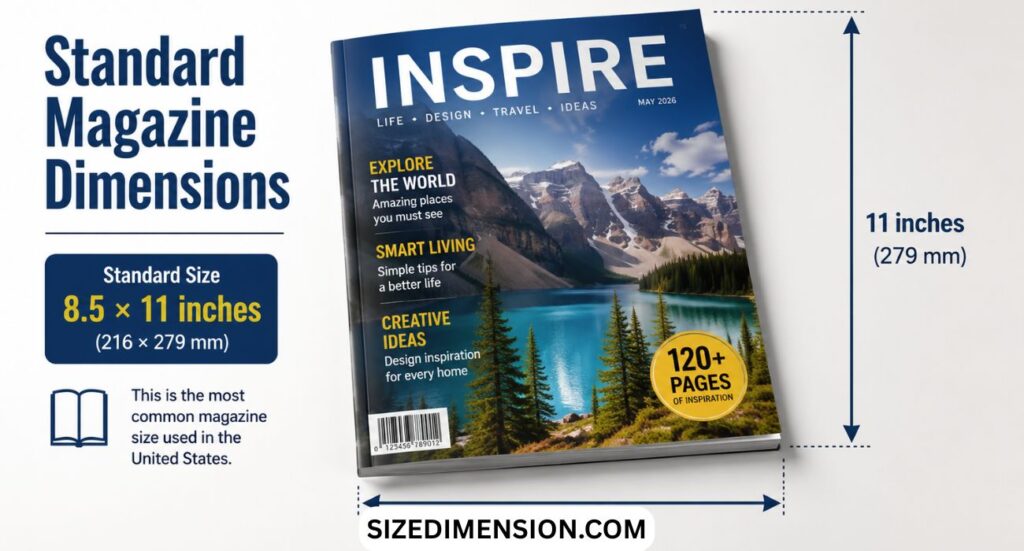
When discussing Standard Magazine Dimensions, it is important to understand that there is no single size used by every publication. Different industries use different formats depending on their content, audience, and production requirements. However, some dimensions have become industry standards because they balance readability, portability, and printing efficiency.
The following table highlights some of the most common Magazine Dimensions in Inches and Magazine Dimensions in Millimeters used in the United States.
| Magazine Format | Dimensions (Inches) | Dimensions (Millimeters) | Common Use |
| Standard Letter | 8.5 × 11 | 216 × 279 | Consumer magazines |
| Digest | 5.5 × 8.5 | 140 × 216 | Compact publications |
| Tabloid | 11 × 17 | 279 × 432 | Large-format magazines |
| 4 × 6 | 102 × 152 | Travel guides | |
| Square | 8.5 × 8.5 | 216 × 216 | Photography magazines |
| Oversized | 9 × 12 | 229 × 305 | Premium fashion magazines |
This Magazine Size Chart provides a quick comparison of the most widely used magazine formats.
Letter Size Magazine (8.5 × 11 inches)
The Letter Size Magazine remains the most popular format in the United States. Measuring 8.5 inches wide and 11 inches tall, this format closely matches standard office paper dimensions. Because it works efficiently with commercial printing equipment, publishers can produce magazines economically while maintaining a professional appearance.
Many consumer magazines use this format because it offers enough room for detailed articles, large photographs, and effective advertising layouts. Designers appreciate the flexibility of the format when creating a Magazine Layout because it supports multi-column designs, attractive image placement, and comfortable reading experiences.
From a production perspective, this format works well with various types of Magazine Binding, including Saddle Stitch Binding and Perfect Binding. The size also provides adequate space for eye-catching Magazine Cover Dimensions while keeping the publication easy to handle.
One major advantage of this format is its compatibility with industry-standard software such as Adobe InDesign, Adobe Illustrator, and Photoshop. Designers can quickly create professional layouts without extensive customization. This efficiency makes the format especially attractive for businesses producing magazines regularly.
Digest Size Magazine (5.5 × 8.5 inches)
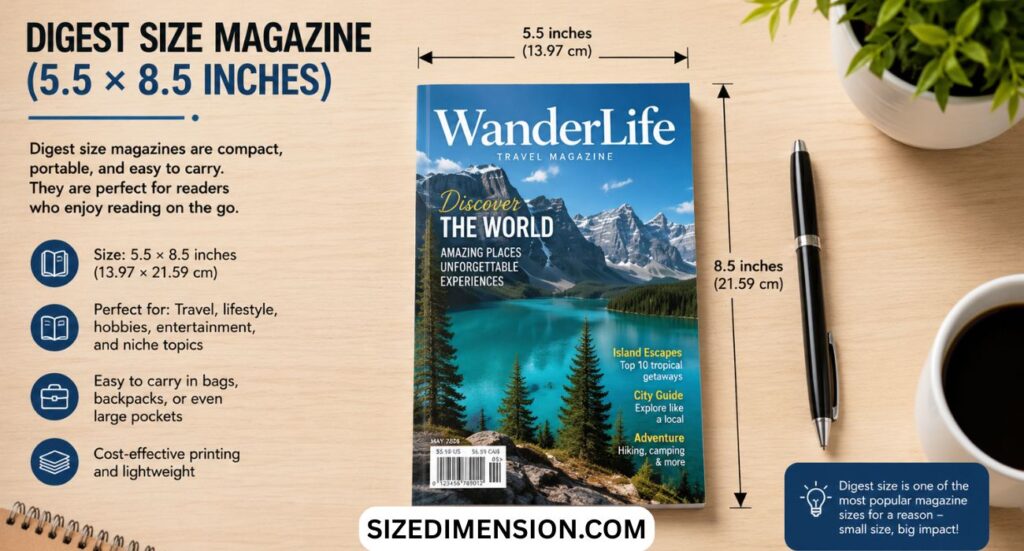
The Digest Size Magazine is significantly smaller than the standard letter format. Measuring 5.5 × 8.5 inches, it offers excellent portability and convenience. Readers can easily carry these compact publications in bags, backpacks, and even large pockets.
The smaller dimensions reduce paper consumption, which can help lower magazine production costs. This benefit makes digest magazines attractive for independent publishers and organizations operating with limited budgets. Despite its smaller size, a digest magazine can still contain substantial content when designed effectively.
This format is especially popular for educational materials, niche publications, hobby magazines, and informational guides. Publishers often choose digest size when portability is a priority. The smaller format encourages focused content and concise writing while maintaining a professional appearance.
Designers working with digest magazines must pay close attention to typography, image sizes, and page organization. Since space is limited, every element of the page layout must be carefully planned. A well-designed digest magazine can deliver excellent reader engagement despite its compact dimensions.
Tabloid Size Magazine (11 × 17 inches)
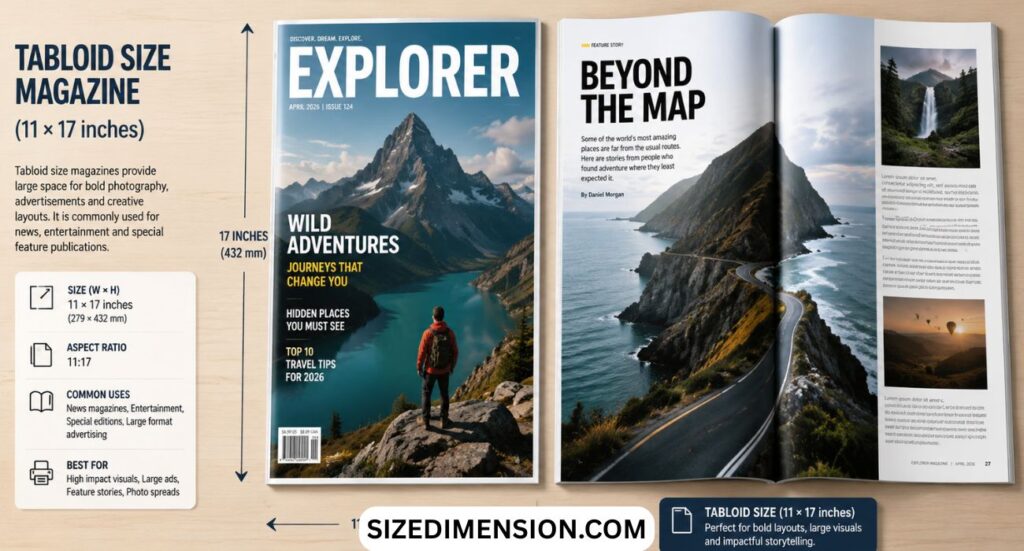
The Tabloid Size Magazine is one of the largest commonly used magazine formats. Measuring 11 × 17 inches, it provides a large canvas for visual storytelling and impactful design. This format is frequently used by large-format magazines, newspaper inserts, entertainment publications, and visual arts magazines.
The larger dimensions make this format ideal for displaying high-resolution photography, detailed illustrations, and expansive graphics. Publications focusing on architecture, travel, and visual arts often benefit from the extra space because it allows readers to appreciate images without compromise.
A tabloid magazine also creates opportunities for sophisticated editorial design and creative publication formatting. Designers can experiment with larger headlines, dramatic layouts, and immersive visual experiences. However, the increased size often leads to higher printing and distribution expenses.
While the format provides excellent visual impact, publishers must consider storage, shipping, and handling requirements. Readers may find larger magazines less portable than digest or standard formats. Nevertheless, for publications that rely heavily on imagery, the tabloid format remains an excellent choice.
Magazine Binding Types and Their Impact on Dimensions
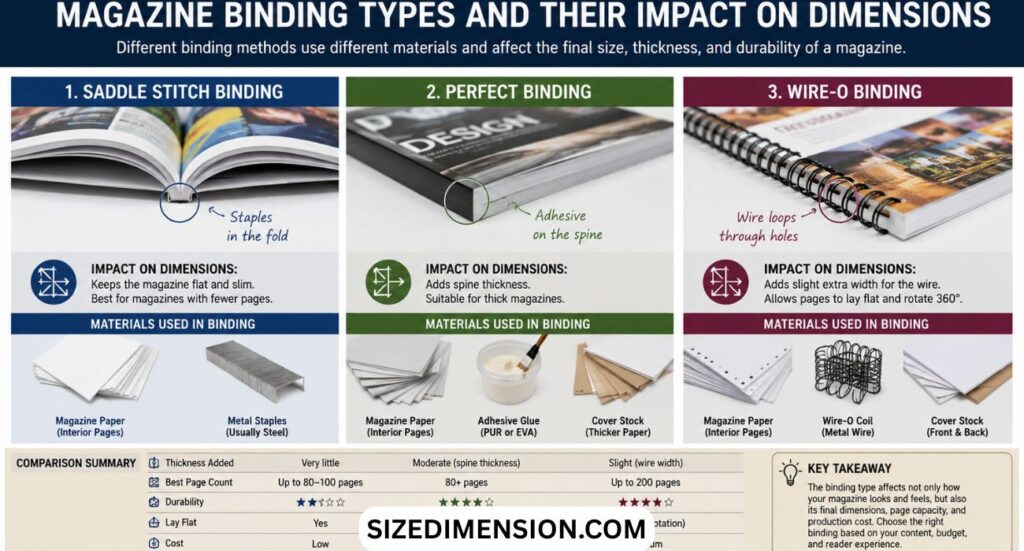
The choice of Magazine Binding affects more than just appearance. Binding influences durability, page capacity, production cost, usability, and even the final dimensions of a publication. Understanding different binding methods helps publishers select the best option for their specific needs.
Saddle Stitch Binding
Saddle Stitch Binding is one of the most widely used methods in magazine printing. The process involves folding sheets together and securing them with staples along the spine. This approach is economical, reliable, and suitable for magazines with relatively low magazine page count.
Most magazines containing between 8 and 92 pages use saddle stitching because it offers a clean appearance while keeping production costs manageable. The binding allows magazines to open comfortably, making them easy to read.
One significant advantage of saddle stitching is its compatibility with many Magazine Formats, including digest and standard letter sizes. Publishers often choose this option for newsletters, promotional magazines, and short-run publications.
The simplicity of the binding process contributes to lower production expenses, making it a preferred choice for businesses seeking affordable printing solutions.
Perfect Binding
Perfect Binding is commonly associated with premium publications and thick magazines. In this method, pages are glued together at the spine, creating a flat edge similar to a paperback book. This approach provides a professional appearance and improved durability.
One major advantage of perfect binding is the ability to print information directly on the spine. Publications with larger magazine page count benefit from this feature because it improves identification and storage.
Many business magazines, educational publications, and high-end publications use perfect binding to enhance perceived value. The squared spine also improves shelf presence, making magazines appear more substantial and professional.
The binding process works especially well with heavier cover stock and thicker paper. Although it generally costs more than saddle stitching, the premium appearance often justifies the additional investment.
Wire-O Binding
Wire-O Binding uses double-loop wire to secure pages. This method allows magazines to lay completely flat when opened, making it highly practical for instructional materials, planners, reference guides, and training manuals.
The ability to rotate pages 360 degrees improves usability, particularly for publications intended for frequent reference. Readers can place the magazine flat on a desk without damaging the binding.
Because the wire occupies space along the edge, designers must account for additional margin requirements during the design process. The format generally works best with smaller magazine sizes, although larger publications can also utilize wire binding when functionality is a priority.
Many educational publishers and technical organizations choose this binding style because of its exceptional durability and convenience.
Read also: Aluminum Can Dimensions
Specialized Magazine Sizes and Formats
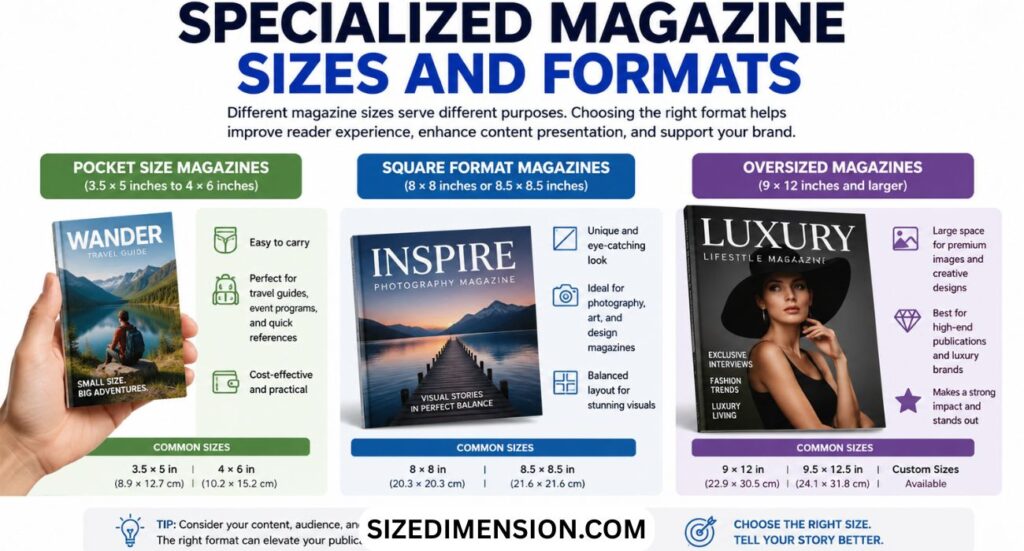
While standard formats dominate the publishing industry, specialized magazine sizes allow publishers to create distinctive products that stand out in competitive markets. These unique dimensions support specific content types and audience preferences.
Pocket Size Magazines (3.5 × 5 inches to 4 × 6 inches)
The Pocket Size Magazine is designed for maximum portability. These mini magazines fit comfortably into pockets, purses, and travel bags. Their compact nature makes them ideal for travel guides, quick-reference publications, and event programs.
Despite their small size, pocket magazines can be highly effective when content is carefully organized. Publishers often focus on concise information and efficient layouts to maximize readability.
Square Format Magazines (8 × 8 inches or 8.5 × 8.5 inches)
The Square Magazine offers a distinctive appearance that immediately captures attention. The symmetrical dimensions create visual balance, making the format especially popular among photography magazines, art magazines, and design magazines.
The square layout allows images to be displayed beautifully without excessive cropping. Many creative professionals prefer this format because it enhances visual storytelling while providing unique branding opportunities.
Oversized Magazines (9 × 12 inches and larger)
The Oversized Magazine represents the premium end of the publishing market. These publications are commonly used by luxury magazines, fashion brands, architecture firms, and lifestyle publishers seeking a sophisticated presentation.
The larger pages allow for stunning photography, elegant typography, and expansive layouts. Readers often associate oversized formats with exclusivity and quality. For this reason, many premium fashion magazines choose larger dimensions to showcase visual content effectively.
Because oversized magazines require more paper, larger packaging, and additional shipping resources, they generally involve higher production expenses. However, their impressive presentation often helps justify premium pricing and stronger brand positioning.
Digital vs. Print Magazine Dimensions
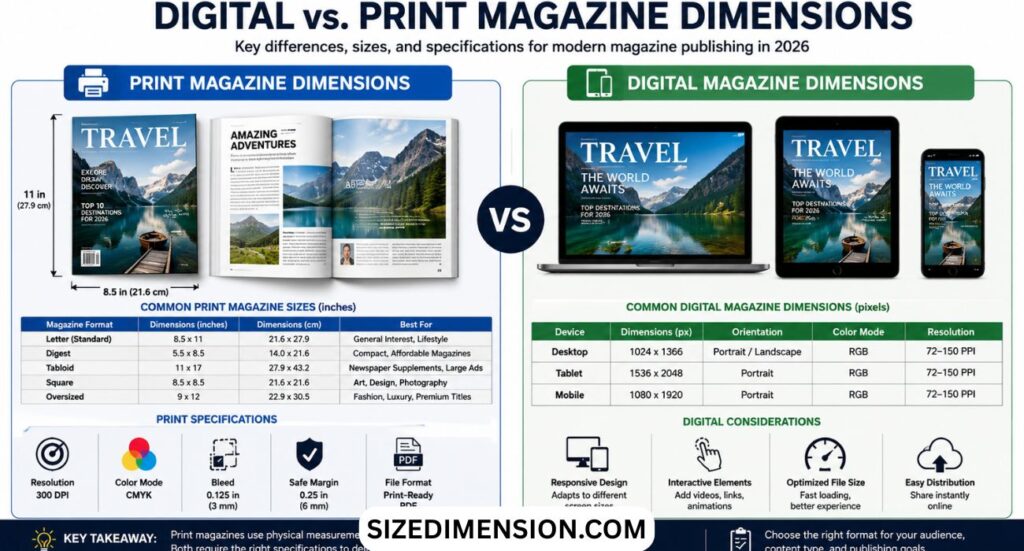
Modern publishing includes both printed magazines and digital editions. Although they often contain the same articles and images, Print Magazine Dimensions and Digital Magazine Dimensions are very different. Printed magazines are measured in inches or millimeters, while digital magazines use pixels and screen resolution. Understanding these differences helps publishers create high-quality publications for every platform.
Many publishers now release both print and digital versions of the same magazine. This approach reaches more readers while allowing content to be viewed on computers, tablets, and smartphones. However, designers must optimize every version separately because printed pages and digital screens have different technical requirements.
The table below compares the main differences between print and digital magazine formats.
| Feature | Print Magazine | Digital Magazine |
| Measurement | Inches or Millimeters | Pixels |
| Color Mode | CMYK Color Mode | RGB Color Mode |
| Resolution | 300 DPI | 72–150 PPI |
| File Type | Print-ready PDF | Interactive PDF, HTML, EPUB |
| Reading Device | Physical Magazine | Computer, Tablet, Smartphone |
Print Magazine Specifications:
Professional Magazine Printing requires careful preparation before sending files to a commercial printer. Every publication must follow proper Magazine Specifications to ensure sharp text, accurate colors, and clean trimming after printing.
One of the most important specifications is Print Resolution. High-quality printed magazines require 300 DPI, which produces crisp photographs and readable text. Using lower resolutions can result in blurry images and poor print quality.
Another essential element is the CMYK Color Mode. Commercial printers use cyan, magenta, yellow, and black ink to reproduce colors. Designing in CMYK helps ensure that printed colors closely match the original design.
Every magazine should also include a Magazine Bleed, which is an extra area extending beyond the final page edge. A standard bleed is 0.125 inches (3 mm) on every side. This additional space prevents unwanted white borders after the magazine is trimmed.
Inside the page, designers should maintain a Safe Margin or safe zone. Important text, logos, and graphics should remain inside this area so they are not accidentally cut during trimming. Keeping content within the safe margin creates a cleaner and more professional appearance.
The trim line marks the final size of the magazine after printing. Everything outside this line is removed during finishing, making accurate setup extremely important. Designers should always review the trim line before exporting print-ready files.
Paper selection also affects the finished magazine. Interior pages usually use text weight paper, while the cover is printed on heavier cover stock for better durability. Paper thickness influences the magazine’s weight, feel, and even its spine width, especially for publications using Perfect Binding.
The following table summarizes common print specifications.
| Specification | Standard Recommendation |
| Print Resolution | 300 DPI |
| Color Mode | CMYK Color Mode |
| Bleed Area | 0.125 inches |
| Safe Margin | 0.25 inches |
| File Format | Print-ready PDF |
| Interior Paper | Text weight paper |
| Cover | Cover stock |
Many professional designers create their layouts using Adobe InDesign, which remains the industry standard for magazine production. Adobe Illustrator is commonly used for vector graphics, logos, and illustrations, while Photoshop Magazine Cover designs often begin in Adobe Photoshop because it provides advanced photo editing tools.
Professional printing companies also check every file before production to ensure proper magazine artwork, print finishing, and accurate magazine printing dimensions.
Quote: “Good magazine design begins long before printing. Proper file preparation prevents costly mistakes and produces professional-quality publications.”
Digital Magazine Dimensions:
The rise of digital publishing has changed how people consume magazines. Readers now access magazines on laptops, tablets, smartphones, and even smart TVs. Because screens vary greatly in size, digital magazines designes are different from printed publications.
Unlike print magazines that use physical measurements, digital magazines use pixels. These pixel dimensions determine how clearly the magazine appears on different devices.
The table below shows common digital dimensions.
| Device | Recommended Dimensions | Orientation |
| Desktop | 1024 × 1366 px | Portrait or Landscape |
| Tablet | 1536 × 2048 px | Portrait |
| Smartphone | 1080 × 1920 px | Portrait |
Unlike print, digital publications use the RGB Color Mode, which displays colors using red, green, and blue light. RGB produces brighter and more vibrant colors on electronic screens than CMYK.
Digital magazines also require lower image resolution than printed magazines. Most digital publications use 72 to 150 PPI because screens do not require the same level of detail as commercial printing.
Another important advantage of digital magazines is responsive magazine design. Responsive layouts automatically adjust to different screen sizes, allowing readers to enjoy the publication whether they are using a desktop computer, tablet, or smartphone.
Designers also consider desktop magazine layout, tablet magazine dimensions, and mobile magazine format when creating digital editions. A layout that looks excellent on a computer may need adjustments for smaller screens.
Publishers often create separate versions for portrait orientation and landscape orientation to improve readability across different devices.
Interactive elements have become another important part of digital magazines. Publishers can include videos, clickable links, image galleries, animations, and embedded audio to improve reader engagement. These features are impossible in traditional printed magazines and provide a more immersive reading experience.
Many publishing companies also use magazine templates to speed up production. Templates maintain consistent publication design, publication formatting, and branding across multiple issues while reducing design time.
Why Choosing the Right Magazine Size Matters
Selecting the correct Magazine Dimensions is one of the most important decisions during Magazine Publishing. The right Magazine Size affects readability, portability, printing expenses, mailing costs, and the overall appearance of the publication. Publishers choose different Magazine Formats depending on their audience, content type, and marketing goals.
A carefully selected size also improves Magazine Layout, making it easier to organize text, images, and advertisements. Whether you are creating consumer magazines, educational publications, or luxury magazines, choosing suitable Magazine Measurements helps deliver a professional reading experience while supporting effective publication design.
International Magazine Sizes
Although the United States mainly uses Letter-size magazines, many countries follow ISO paper sizes. The most common international options include A4 magazine size and A5 magazine size, which are widely used across Europe, Asia, and Australia for magazines, catalogs, and business publications.
Using international sizes is especially helpful for publishers serving global audiences. Designers working on worldwide projects often create custom magazine sizes based on ISO standards, making Magazine Printing easier in multiple countries while maintaining consistent Magazine Specifications.
Magazine Trim Size, Bleed, and Safe Margin
Every professionally printed magazine requires an accurate Magazine Trim Size, Magazine Bleed, and Safe Margin. The trim size represents the final dimensions after cutting, while the bleed extends beyond the page edge to prevent unwanted white borders during print finishing.
The bleed area, trim line, and safe zone work together to protect important design elements. Keeping text and logos inside the safe margin ensures nothing important is removed during cutting, resulting in clean Magazine Cover Dimensions and professional-quality print-ready files.
Best Software for Designing Magazine Layouts
Professional designers commonly use Adobe InDesign, Adobe Illustrator, and Photoshop when creating magazines. Adobe InDesign is ideal for multi-page documents, while Adobe Illustrator produces vector graphics, and Photoshop Magazine Cover projects benefit from advanced photo editing tools.
These programs support modern editorial design, accurate Magazine Layout, and complete publication formatting. They also simplify exporting print-ready files, managing Magazine Resolution, and preparing files with correct CMYK Color Mode, RGB Color Mode, and 300 DPI settings.
Magazine Cover Design Tips
An attractive cover creates a strong first impression and encourages readers to pick up the magazine. Effective Magazine Cover Size planning includes clear typography, balanced spacing, high-quality photography, and attractive color combinations that reflect the publication’s identity.
Professional designers carefully position headlines within the safe zone while allowing background images to extend into the bleed area. A well-designed cover supports strong branding and improves reader engagement, helping magazines compete successfully on bookstore shelves and digital platforms.
Factors That Affect Magazine Production Costs
Several factors influence magazine production costs, including page count, paper quality, binding method, printing quantity, and finishing options. Thicker cover stock, premium coatings, and larger Oversized Magazine formats generally increase manufacturing expenses compared to smaller publications.
The chosen Magazine Binding, paper thickness, spine width, and Magazine Printing method also affect the final budget. Careful planning allows publishers to balance quality and cost while producing a durable, attractive professional magazine layout that meets readers’ expectations.
See also: 13 Common Things That Weigh 3 Ounces (With Pic)
FAQ’s
What are Normal Magazine Dimensions?
Normal Magazine Dimensions vary, but the most common size in the United States is 8.5 × 11 inches (21.6 × 27.9 cm). Other popular formats include 5.5 × 8.5 inches for digest magazines and 11 × 17 inches for tabloid magazines.
Is Vogue Magazine A4 Size?
No, Vogue magazine is not exactly A4 size. The US edition is approximately 8 × 10.875 inches (20.3 × 27.6 cm), making it slightly narrower and shorter than a standard A4 sheet.
Are Magazines A4 or A5?
Magazines can be A4, A5, or custom sizes, depending on the publisher and country. In Europe, A4 and A5 are common, while the United States mainly uses the 8.5 × 11-inch standard magazine size.
What is the Size of a Magazine in CM?
A standard US magazine measures about 21.6 × 27.9 cm, while an A4 magazine measures 21 × 29.7 cm. Digest magazines are approximately 14 × 21.6 cm, making them smaller and more portable.
Conclusion
Magazine Dimensions play an important role in creating a magazine that looks professional and is easy to read. The right magazine size helps organize text, images, and advertisements neatly. It also improves printing quality, reader comfort, and overall design. Choosing the correct dimensions helps publishers create magazines that meet their goals and attract more readers.
Understanding Magazine Dimensions makes it easier to select the best format for any type of publication. Whether you choose a letter, digest, tabloid, square, or oversized format, each size has its own purpose and benefits. Careful planning helps reduce printing costs, improve presentation, and create a magazine that readers enjoy from cover to cover.