
500 Grams- Things with Pic That Weigh 500g
500 grams is a unit of weight in the metric system. It equals half a kilogram. Many everyday items weigh about 500 grams.
Most people see 500 grams on food packages and labels. But it can be hard to imagine this weight. Knowing common examples makes it much easier.
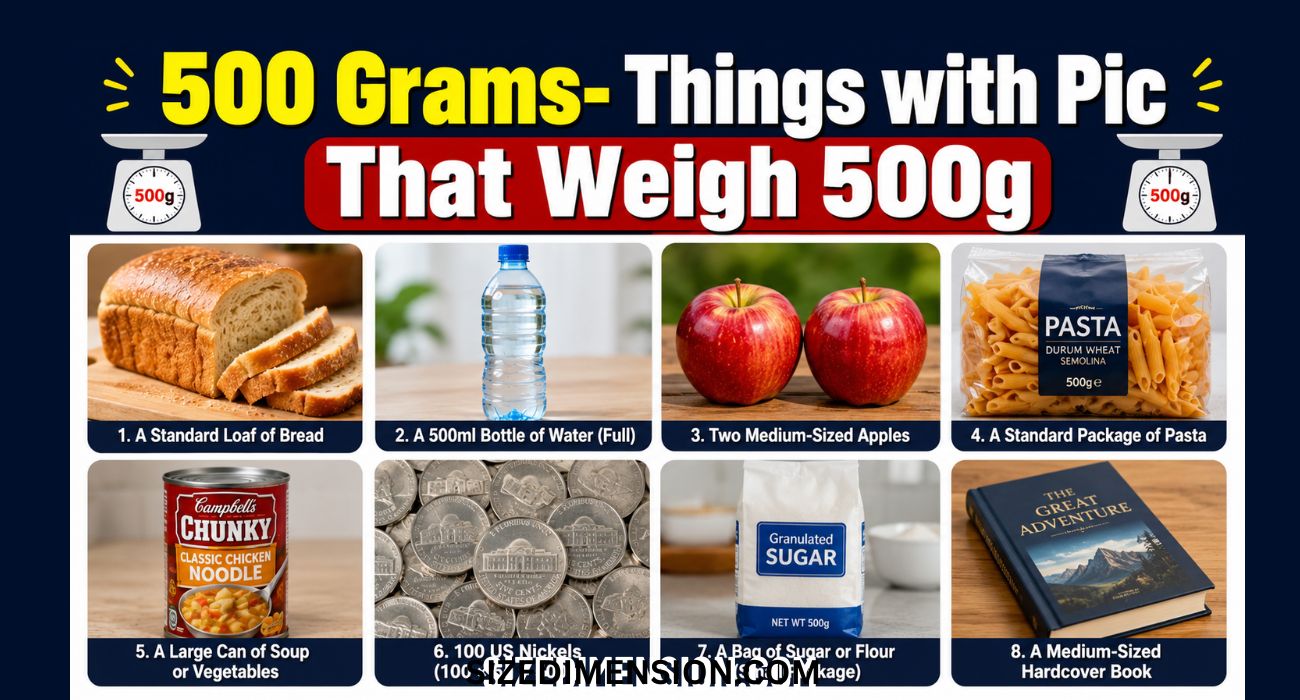
Many Things That Weigh 500 Grams are found at home. A loaf of bread, a water bottle, and a hardcover book are good examples. These items help you understand and compare weights in daily life.
Read more: Things That Weigh 1gram
15 Everyday Things That Weigh About 500 Grams
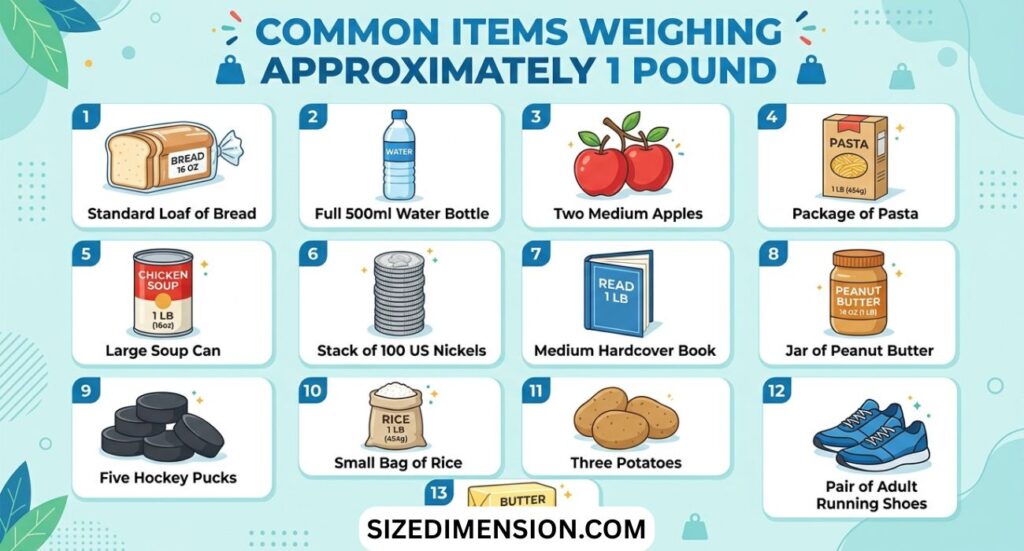
Many people learn weights more easily when they compare them with familiar objects. These household items that weigh 500 grams provide excellent examples because most people see them regularly. These everyday things that weigh 500 grams offer a practical way of understanding 500 grams without needing special equipment.
A Standard Loaf of Bread
A standard loaf of bread is one of the most familiar things that weigh 500 grams. Many grocery stores sell packaged bread close to this weight because it offers a practical amount for families while remaining easy to package, transport, and display on shelves.
The exact loaf of bread weight depends on ingredients and moisture content. White bread is often lighter, while whole wheat and multigrain varieties may weigh slightly more. Even so, most commercial loaves stay close to the half-kilogram range overall today.
Because bread is found in almost every household, it serves as a convenient household weight reference. Holding a loaf regularly helps people visualize 500 grams and understand how much a half kilogram feels like during everyday shopping and meal preparation.
A 500ml Bottle of Water (Full)
A full 500ml water bottle is one of the most accurate objects that weigh 500g. Water has a density of about one gram per milliliter, making this bottle an easy and reliable example of a half-kilogram weight reference.
The small weight of the plastic bottle adds only a little extra mass. For most everyday purposes, a filled bottle remains extremely close to 500 grams and is commonly used for simple kitchen scale calibration and household measurements.
Since bottled water is available almost everywhere, it provides a convenient way of understanding 500 grams. Many people use this familiar item when estimating package weights, comparing objects, or learning basic metric system measurement concepts at home.
Two Medium-Sized Apples
Two medium apples together weigh about 500 grams, making them useful 500 grams examples. Individual apples vary by variety, size, and ripeness, but many average apples weigh around 250 grams each when purchased from grocery stores today.
The apple weight in grams can differ between Gala, Fuji, Honeycrisp, and Granny Smith varieties. Larger apples may exceed 250 grams, while smaller ones weigh less. Combining two average apples usually creates a reliable half-kilogram weight comparison for estimation.
Because apples are common fruits in many homes, they provide a simple fruit weight comparison. Holding two apples together helps people understand how heavy is 500 grams while also offering a practical visual reference for everyday weight estimation.
A Standard Package of Pasta
A package of pasta is another common example among household items that weigh 500 grams. Many manufacturers package dried pasta in 500-gram quantities because it provides enough servings for family meals while maintaining consistent packaging standards worldwide.
Whether buying spaghetti, penne, rotini, or fettuccine, the pasta box weight often remains close to 500 grams. This standardization helps shoppers compare products easily and gives cooks a dependable amount when preparing meals for several people.
Because pasta packages clearly display their weight, they make excellent package weight examples. Seeing and handling these products regularly helps consumers recognize 500 gram objects and develop better awareness of common metric weights during shopping trips.
A Large Can of Soup or Vegetables
A large soup can or container of canned vegetables often weighs close to 500 grams. The combined weight of the metal can and food contents creates a useful example of a common household item around half a kilogram.
Products such as beans, corn, tomatoes, and ready-to-eat soups frequently fall within this weight range. The exact soup can weight depends on the product type, liquid content, and packaging size, but many larger cans remain surprisingly close.
Since canned goods are easy to find in kitchens and supermarkets, they serve as practical weight reference examples. They help people visualize 500 grams and compare other objects when estimating weight without using a scale at home.
100 US Nickels
100 US nickels provide one of the most precise examples of 500 grams available. According to official U.S. Mint specifications, each nickel weighs exactly 5 grams, making their combined weight a dependable reference for measurement and calibration purposes.
The simple calculation makes this example easy to understand. Multiplying 100 coins by 5 grams results in exactly 500 grams, creating a trusted standard used by many people for testing scales and checking measurement accuracy.
Because coin weights are carefully regulated, nickels offer an excellent accurate weight reference. They are commonly used as scale testing objects and remain one of the easiest methods for verifying weight measurements without specialized equipment available.
A Bag of Sugar or Flour (Small Package)
A small bag of sugar or flour package commonly weighs around 500 grams. Many baking products are sold in this size because it provides a convenient amount for recipes while remaining easy to store and transport.
The exact sugar bag weight may vary between brands, but metric packaging often uses 500 grams as a standard size. Flour, powdered sugar, and brown sugar products frequently follow the same packaging approach in many markets.
These common baking ingredients are useful for learning metric units and understanding everyday weights. Since the weight is printed clearly on the package, they offer reliable examples of common things weighing half a kilogram.
A Medium-Sized Hardcover Book
A hardcover book often weighs close to 500 grams, especially if it contains several hundred pages. Paper quality, cover materials, and page count all affect the final weight, but many standard novels fit within this range.
The typical hardcover novel weight falls near half a kilogram because publishers balance durability and readability. Books with thicker paper or larger dimensions may weigh more, while shorter books can weigh slightly less overall.
Since books are common everyday household objects, they make excellent visual references for 500 grams. Holding a medium-sized hardcover helps people understand weight better and provides another simple way to estimate a half-kilogram object accurately.
A Jar of Peanut Butter
A standard jar of peanut butter is among the common things that weigh 500 grams. Many popular brands package peanut butter in sizes that weigh close to half a kilogram, making it a familiar item found in kitchens across the country.
The total weight includes both the peanut butter and the container itself. Depending on the brand and packaging material, the final weight may vary slightly, but many jars remain very close to the 500-gram range overall.
Because peanut butter is a staple pantry item, it serves as a useful household weight reference. Regularly handling a jar helps people develop a better understanding of 500 grams and recognize similar weights in everyday situations.
Five Standard Hockey Pucks
Five regulation hockey pucks together weigh approximately 500 grams. Each puck weighs around 170 grams, so combining several creates a simple and practical example for people interested in sports equipment and weight comparisons.
Hockey pucks are made from dense vulcanized rubber, which gives them a substantial feel despite their compact size. Their standardized manufacturing process ensures relatively consistent weights across different brands and product lines available today.
Sports enthusiasts often use pucks as weight comparison examples because they are durable and easy to handle. They provide another interesting way to visualize 500 gram objects without relying on common food or grocery products.
A Small Bag of Rice
A small bag of rice frequently weighs about 500 grams and is often sold in this size in supermarkets. Rice manufacturers use this packaging because it offers a convenient quantity for families while remaining affordable and easy to store.
Whether it contains white rice, jasmine rice, or basmati rice, the package generally stays near the half-kilogram mark. The clearly printed label makes rice one of the easiest products for confirming exact weight measurements.
Rice serves as one of the most practical food weight examples available. Since it is commonly purchased worldwide, it helps people understand how heavy is 500 grams and provides a dependable visual reference for comparison.
Three Medium Potatoes
Three medium potatoes together often weigh close to 500 grams. Individual potato weights vary based on variety and size, but combining three average potatoes usually creates a weight very near half a kilogram.
Russet potatoes tend to be larger and heavier, while red and yellow varieties may weigh slightly less. Even with these differences, potatoes remain useful examples for estimating weight because they are widely available in most households.
As common kitchen ingredients, potatoes offer a simple household measurement guide. They help people compare food quantities and gain a better understanding of common metric weights through everyday cooking and meal preparation activities.
A Pair of Adult Running Shoes
A pair of lightweight adult running shoes often weighs around 500 grams. Modern athletic footwear is designed to be comfortable and durable while remaining light enough for walking, jogging, and other physical activities throughout the day.
The exact weight depends on the shoe size, materials, and design features. Performance shoes may weigh slightly less, while heavily cushioned models can weigh more, but many pairs remain close to the half-kilogram range.
Since shoes are familiar everyday household objects, they provide another useful physical weight reference. Picking up a pair of running shoes can help people estimate 500 grams without needing a scale or measuring device.
A Large Pack of Butter
A large pack of butter often weighs approximately 500 grams when multiple sticks are packaged together. This quantity is common in many grocery stores because it provides enough butter for cooking, baking, and daily household use.
The package usually contains several individually wrapped portions that add up to the total weight. Manufacturers frequently use standardized measurements, making butter a reliable product for learning about weight and package sizing.
Because butter is used in countless recipes, it serves as a practical weight reference example. The clearly labeled packaging allows consumers to compare weights easily and improve their understanding of 500g measurement concepts.
A Small Box of Laundry Detergent
A compact box of powdered laundry detergent can weigh close to 500 grams depending on the brand and formula. These smaller packages are designed for convenience and are often purchased by individuals or small households.
The dense nature of detergent powder allows a relatively small package to contain a significant amount of weight. This makes it a good example of how different materials can occupy varying amounts of space.
Laundry detergent is a common household product and provides another useful object weight example. It helps people recognize items around 500 grams while demonstrating that everyday products can serve as practical weight references.
Read also: Things that weigh 10 grams
How to Measure 500 Grams Without a Scale
Many people need a quick method for measuring without a scale. Fortunately, several common household objects provide surprisingly accurate estimates.
The easiest method is using a full 500ml water bottle because the weight of the water closely matches 500 grams. Another method involves counting 100 US nickels, which creates an accurate scale calibration weight.
A practical weight estimation guide often starts with handling familiar items repeatedly. Over time, your brain develops a memory of what a half kilogram feels like. This makes weight estimation techniques more accurate during cooking, shipping, and household tasks.
“The best way to understand weight is to compare it with objects you handle every day.”
Learning through familiar objects is often easier than memorizing numbers alone.
Comparing 500 Grams to Other Common Weights
Weight comparisons help create a clearer understanding of how different measurements relate to one another. A good weight comparison chart makes it easier to recognize weight differences.
| Weight | Metric Equivalent | Common Example |
| 100g | 0.1 kg | Bar of soap |
| 250g | 0.25 kg | One large apple |
| 500g | 0.5 kg | Full water bottle |
| 1000g | 1 kg | Four medium apples |
This metric weight chart demonstrates how 500 grams fits among other common metric weights.
500 Grams vs. 1 Pound
One of the most common questions involves grams to pounds conversion.
| Measurement | Weight |
| 500 grams | 1.102 pounds |
| 1 pound | 454 grams |
As shown above, 500 grams in pounds equals approximately 1.1 pounds. Therefore, 500 grams is slightly heavier than one pound.
Many people assume they are identical, but understanding this difference is important when comparing imperial measurements and metric units.
How 500 Grams Relates to Other Metric Weights
Looking at kilogram comparison values makes metric measurements easier to understand.
| Metric Weight | Relationship to 500g |
| 100g | One-fifth of 500g |
| 250g | Half of 500g |
| 500g | Half kilogram |
| 1000g | Double 500g |
In metric terms, 500 grams in kilograms equals exactly 0.5 kilograms. In addition, 500 grams in ounces equals approximately 17.6 ounces.
These conversions are useful when reading recipes, shipping labels, or product packaging.
Why 500 Grams Is an Important Everyday Weight

The weight of 500 grams appears in daily life more often than most people realize. Many grocery products, food packages, and household goods are designed around this measurement. Understanding this weight helps people make better estimates when shopping, cooking, or mailing packages without always relying on a scale.
Since 500 grams equals half a kilogram, it serves as a useful benchmark for learning metric measurements. Students, home cooks, and online sellers frequently encounter this weight. Having a clear idea of what 500 grams feels like can make many everyday tasks faster and more convenient.
Common Foods That Weigh Around 500 Grams
Many food products are sold in packages weighing close to 500 grams. Examples include pasta, bread, sugar, flour, and certain frozen foods. Manufacturers often choose this size because it provides a practical amount for families while keeping packaging and storage simple.
Fresh foods can also reach this weight. Two medium apples, several oranges, or a portion of vegetables may weigh about 500 grams. These food examples make it easier to visualize the weight and develop a stronger understanding of common metric measurements.
Using 500 Grams for Scale Testing
People often need a known weight to check whether a scale is working correctly. A 500-gram reference is useful because it is large enough to show accurate readings while remaining easy to handle. This makes it popular for kitchen and household scale testing.
A full 500ml bottle of water is one of the easiest options for this purpose. Since water weighs approximately one gram per milliliter, it provides a dependable reference. Many people also use coins or packaged products when testing scale accuracy.
Understanding the Difference Between 500 Grams and One Pound
Many people assume that 500 grams and one pound are the same weight. In reality, 500 grams is slightly heavier. One pound equals approximately 454 grams, creating a noticeable difference when measuring food, packages, or other objects accurately.
Knowing this distinction is important when converting between metric and imperial systems. Recipes, shipping services, and product labels may use either measurement. Understanding the relationship between grams and pounds helps prevent confusion and improves measurement accuracy.
Practical Uses of 500-Gram Measurements
A 500-gram measurement is commonly used in kitchens, grocery stores, and shipping centers. Food packaging often displays this weight because it is convenient for portion control and meal planning. It also provides a standard size that consumers easily recognize.
Businesses frequently use 500-gram units when calculating shipping costs and inventory. Home users benefit as well, especially when estimating package weights or preparing recipes. This measurement offers a practical balance between being lightweight and substantial enough for daily tasks.
See also: Pringles Can Dimensions
Tips for Estimating 500 Grams Without a Scale
Estimating 500 grams becomes easier when you regularly handle objects that weigh about the same amount. A loaf of bread, a hardcover book, or a full water bottle can help train your sense of weight. Repeated comparison improves accuracy over time.
Developing weight estimation skills is useful in many situations. Whether packing a parcel, checking food portions, or organizing household items, knowing what 500 grams feels like provides a quick reference. Familiar objects can often replace the need for immediate scale access.
FAQ’s
What are things that weigh 500 grams?
Common things that weigh 500 grams include a standard loaf of bread, a full 500ml water bottle, two medium apples, and a package of pasta. These everyday items provide easy weight references.
What household items are 500 grams?
Several household items are 500 grams, such as a hardcover book, a small bag of sugar or flour, a large can of soup, and a full water bottle. They are useful for estimating weight without a scale.
What can I use as a 500 g weight?
A full 500ml bottle of water is one of the most accurate objects you can use as a 500g weight. You can also use 100 U.S. nickels, which weigh exactly 500 grams combined.
What does 500 grams look like?
500 grams looks roughly like a loaf of bread, a medium hardcover book, or a full bottle of water. It is about half a kilogram or slightly more than one pound in weight.
Conclusion
Learning about Things That Weigh 500g helps you understand weight in a simple way. Many everyday items match this weight, including a loaf of bread, a full water bottle, two apples, and a package of pasta. These examples make weight measurements easier to picture and remember during daily activities at home, school, and while shopping.
Knowing Things That Weigh 500g can also help with cooking, mailing packages, and checking scale accuracy. A clear understanding of this weight builds confidence when using metric measurements. By comparing common objects, you can quickly recognize what 500 grams feels like and make better weight estimates without needing special tools every time.