10 Grams- Things with Pic’s That Weigh 10grams_2026
Things that weigh 10 grams are very small and light objects that help explain a small unit of weight. They show what 10 grams means in real life using simple, everyday items. These objects make it easy to understand weight without complex tools or calculations.
Many people cannot clearly imagine how light 10 grams actually is in daily life. It becomes much easier to learn when real objects are used instead of only numbers. These examples help turn an abstract idea into something simple and easy to picture.
Things that weigh 10 grams include common items like coins, paper clips, sugar, and almonds. These objects are found in almost every home, kitchen, or office around us. They help people quickly estimate small weights without needing a digital scale.
What Is 10 Grams?
Many people ask, how much is 10 grams and whether it is considered heavy or light. In simple terms, 10 grams is a very small amount of mass used in the metric system. Grams are commonly used around the world for food, science, jewelry, and many types of cooking measurements. In the United States, where the imperial system often uses ounces and pounds, grams may feel unfamiliar at first.
A 10g weight is light enough to hold easily in your hand. It is much lighter than a smartphone, wallet, or coffee mug. However, it still matters for accurate food portion measurement, mailing items, and measuring small products. When you understand 10 gram measurement, you become better at weight estimation and daily calculations.
Many people use 10 grams while baking or preparing meals because cooking ingredient weights affect taste and texture. Even slight mistakes can change results. In nutrition tracking, 10 grams can represent sugar, flour, nuts, or spices. This is why learning how much is 10 grams is practical rather than just educational.
The value of household items 10 grams becomes clear when you do not have a scale available. Instead of guessing, you can compare an object to exact weight examples and make smarter estimates.
Read more: Things That Weigh 100 grams
How Much is 10 Grams in Other Units?
Because Americans often think in ounces and pounds, understanding 10 grams conversion is important. The following weight conversion chart makes these measurements easier to understand.
| Unit | 10 Grams Equals | Notes |
| Kilograms | 0.01 kg | Metric conversion |
| Milligrams | 10,000 mg | 1 g = 1,000 mg |
| Pounds | 0.022 lb | Approximate |
| Ounces | 0.35 oz | About one-third ounce |
| Carats | 50 ct | Used in gemstones |
| Grains | 154.3 gr | Traditional unit |
| Teaspoons | ~2 tsp | Depends on ingredient |
| Tablespoons | ~⅔ tbsp | Varies by density |
This table shows that 10 grams in kilograms equals only 0.01 kilograms, proving how small the amount is. At the same time, 10 grams in milligrams equals 10,000 mg, which sounds much larger because milligrams are tiny units.
Many people also search for 10 grams in ounces and 10 grams in pounds. Since 1 ounce equals about 28.35 grams, 10 grams vs ounce comparisons show that 10 grams equals roughly one-third of an ounce. Likewise, 10 grams vs pound comparisons reveal how tiny this amount really is because one pound contains about 453.6 grams.
Another common question involves grams to teaspoons and grams to ounces conversion. These conversions depend on ingredient density because grams measure weight while teaspoons measure volume. This difference matters during measuring ingredients and baking measurements.
Understanding metric conversion helps bridge the gap between the metric system and the imperial system. Once readers understand this relationship, common weight comparisons become easier and more practical.
Everyday Things That Weigh 10 Grams
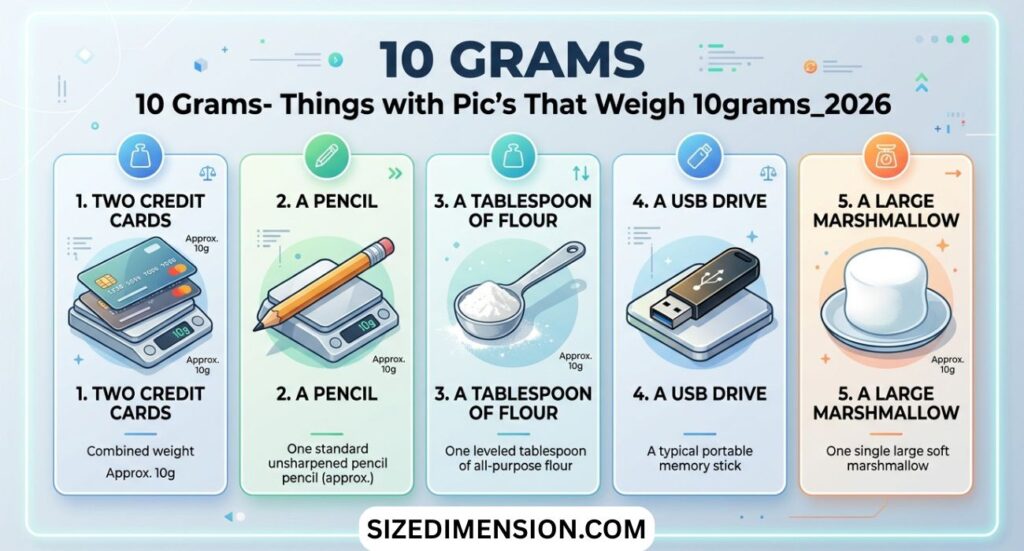
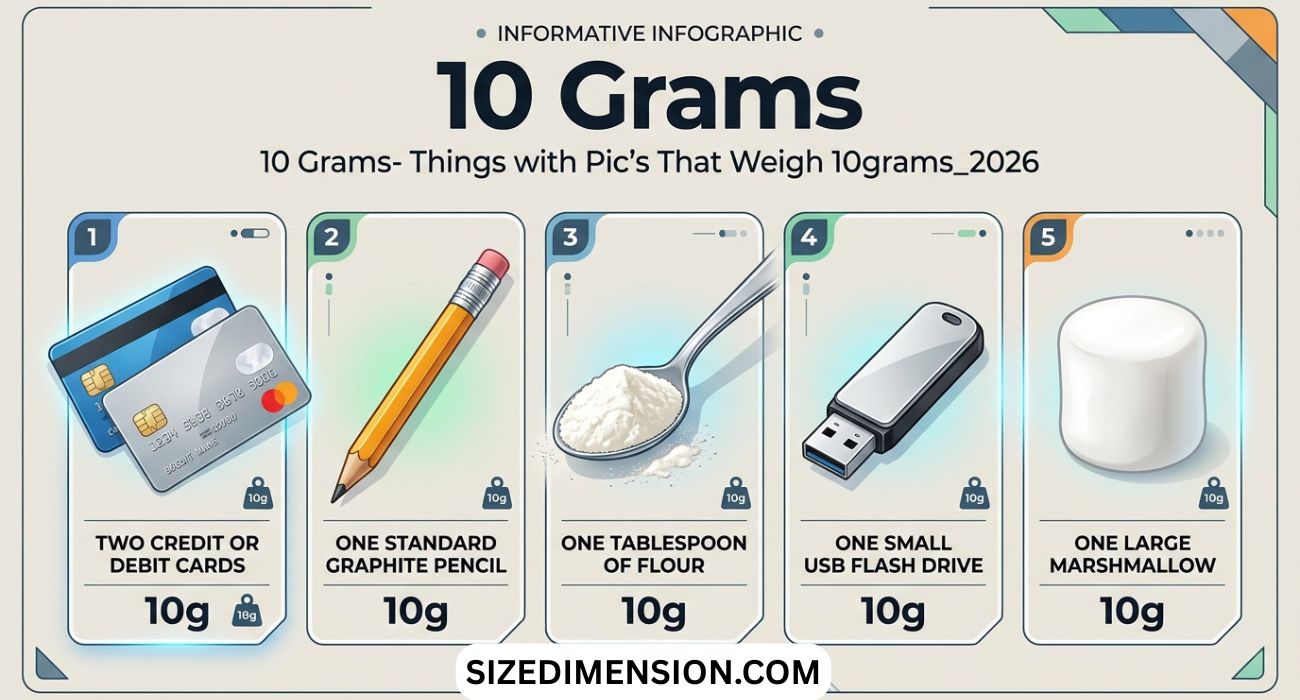
The easiest way to understand 10 grams is by looking at everyday objects by weight. These examples act as reference weights that help with measuring without a scale and daily weight estimation. Some examples are exact while others are close approximations.
These common items weighing 10 grams are useful because they are found in homes, offices, and kitchens. They serve as 10g examples and practical tools when you need weight without scale solutions.
Ten Standard Paper Clips
Standard paper clips are among the most useful 10 gram objects because of their consistent size and design. One regular paper clip weighs about 1 gram, making ten clips close to 10 grams.
The paper clips weight is reliable because manufacturers produce them using similar steel wire thickness. This makes paper clips helpful for accurate weight measurement and quick weight reference checks.
Paper clips are often overlooked, yet they are excellent lightweight objects. Teachers, office workers, and students can use them as simple household weight references. Among exact 10 gram items, they remain one of the easiest to count and use.
Two US Nickels
Two nickels create one of the most dependable 10 grams examples. Each U.S. nickel weighs exactly 5 grams, meaning two nickels equal 10 grams precisely.
The US nickels weight is standardized by the government. These coins contain copper and nickel, creating durability and consistency. Because the weight never changes, nickels provide a trusted weight reference and are ideal for small item weights.
This makes nickels especially useful when people need to measure 10 grams but lack a digital scale or kitchen scale. For Americans, two nickels may be the easiest 10 gram household items to remember.
Four US Pennies
Pennies also help explain how much is 10 grams. Modern pennies made after 1982 weigh 2.5 grams each. Four coins therefore equal 10 grams.
The pennies weight remains standardized despite changes in composition. Earlier pennies contained mostly copper, while modern versions use zinc with copper coating. This design keeps production affordable while maintaining consistent grams measurement.
Pennies are valuable everyday weight examples because they are widely available. These coins make practical reference weights for beginners learning about 10 gram measurement.
Two Sheets of A4 Paper
Office paper may not seem useful for weight estimation, but two sheets of A4 paper can approximate 10 grams.
The A4 paper weight depends on paper thickness, usually measured in GSM or grams per square meter. Standard office paper at 80 GSM weighs around 5 grams per sheet.
This means two sheets create a practical weight reference for office settings. Paper provides one of the most accessible 10g household objects for people working with documents and mailing materials.
Ten US Dollar Bills
Money is another useful way to visualize 10 grams. One U.S. dollar bill weighs approximately 1 gram, meaning ten bills equal 10 grams.
The dollar bill weight stays consistent because American currency uses a cotton-linen blend instead of traditional paper. This special material improves strength and durability.
Because people carry cash regularly, ten bills become memorable 10 gram objects and reliable household weight references. These exact weight examples are practical for quick estimation and learning.
Two Credit or Debit Cards
Credit and debit cards are excellent 10 gram household items because of their standard manufacturing. A single card usually weighs around 5 grams, which means two cards together equal approximately 10 grams. Since cards are part of daily life, they become convenient household items 10 grams for quick comparison.
The credit card weight remains fairly consistent because financial cards follow international size and thickness standards. Most are made from PVC or strong plastic materials that balance flexibility with durability. This standardization allows cards to act as reliable reference weights.
For people learning how much is 10 grams, cards are easy to remember because they are always nearby. When no kitchen scale or digital scale is available, two cards offer a simple solution for weight estimation and measuring without a scale.
One Standard Graphite Pencil
A pencil may seem too ordinary to be useful for grams measurement, but it is actually a strong visual example. One unsharpened standard pencil weighs between 7 and 10 grams depending on wood type, eraser size, and manufacturing.
The graphite pencil weight comes from a mix of wood casing, graphite core, metal ferrule, and rubber eraser. Most No. 2 pencils used in American schools are close to 10 grams, making them practical 10 gram objects.
Students often overlook pencils as weight reference tools, yet they are among the easiest common household objects to picture. Because pencils are linked to classrooms and writing, they provide memorable everyday weight examples and useful 10g examples.
Two Teaspoons of Granulated Sugar
Food measurements provide some of the most practical ways to understand 10 grams. Two level teaspoons of sugar weigh about 10 grams, making sugar one of the easiest kitchen-based examples.
The sugar weight per teaspoon is generally around 5 grams for white sugar. Therefore, two teaspoons equal roughly 10 grams when measured properly. This is where granulated sugar measurement becomes important.
Many people rely on measuring spoons during cooking measurements and baking measurements. Since recipes require precision, understanding grams to teaspoons and cooking ingredient weights improves results. However, the exact amount depends on ingredient density and whether the spoon is level or packed.
Sugar offers practical food portion measurement guidance and works as a simple 10g weight example for kitchens.
One Tablespoon of Flour
Flour is another familiar kitchen item used for 10 gram measurement. One tablespoon of flour weighs between 8 and 10 grams, making it a close approximation.
The flour weight tablespoon depends on how flour is handled. Scooping directly from a container compresses flour and increases weight, while spooning and leveling provides better accuracy.
This explains why measuring ingredients carefully matters. During baking measurements, even small differences can affect texture and flavor. Flour therefore becomes both a useful weight reference and a lesson in ingredient density.
Although flour is not always an exact 10 gram item, it remains one of the most practical 10 gram household items because kitchens already contain the necessary kitchen tools and measuring spoons.
Seven to Ten Almonds
Almonds provide a healthy and practical way to understand 10 grams. Depending on size, seven to ten almonds typically weigh around 10 grams.
The almond weight varies because almonds are natural products rather than manufactured objects. Larger almonds may weigh more, while smaller ones weigh less. Despite this variation, almonds remain helpful everyday objects by weight.
For people tracking nutrition, almonds help with food portion measurement and calorie control. They also act as memorable 10 grams examples because readers can see and count them directly.
This makes almonds valuable household weight references for healthy eating and weight estimation.
Four Standard Ping-Pong Balls
Sports equipment can also teach how much is 10 grams. Regulation ping-pong balls weigh about 2.7 grams each. Four together weigh roughly 10.8 grams, which is very close to 10 grams.
The ping pong ball weight is controlled by international sports rules. Each ball measures 40 mm and is made from lightweight plastic or celluloid.
Because they are extremely light, ping-pong balls help people visualize 10 grams better than many heavier objects. Their hollow design demonstrates how volume and weight are different concepts.
Among lightweight objects, ping-pong balls remain memorable 10g examples and enjoyable everyday weight examples.
Ten Thumbtacks
Thumbtacks are another office item useful for understanding 10 grams. A standard metal thumbtack weighs approximately 1 gram, so ten thumbtacks total about 10 grams.
The thumbtacks weight stays relatively consistent because of uniform production methods. Their steel points and metal or plastic heads keep size and mass predictable.
These small tools are excellent reference weights because they are durable, inexpensive, and commonly found in homes and offices. As small item weights, thumbtacks are easy to count and compare.
For anyone learning how to weigh 10 grams, thumbtacks join paper clips as reliable 10 gram household items.
Two AA Batteries (Lightweight Types)
Some lightweight or rechargeable AA batteries can collectively weigh close to 10 grams, depending on the brand and battery chemistry. While standard alkaline batteries are heavier, smaller rechargeable or specialty batteries sometimes provide a useful comparison for 10 grams.
Battery weight varies because of internal materials and power capacity. This makes them an interesting example of how small item weights can differ even when objects look similar. Batteries are common household products, making them practical everyday objects by weight and useful for weight estimation.
One Small USB Flash Drive
A compact USB flash drive often weighs around 8 to 12 grams, making it a close match for 10 grams. These storage devices are lightweight because they contain small electronic components inside plastic or metal casings.
A USB drive is a modern example among 10 gram objects because many people carry one for school or work. Their lightweight design helps readers visualize 10 grams using a familiar technology item while learning about grams measurement.
Two Sheets of Standard Greeting Card Paper
Greeting card paper is thicker than regular office paper and can provide another useful 10g household objects example. Two sheets of medium-weight greeting card stock may weigh approximately 10 grams.
Paper products differ based on thickness and material quality. This demonstrates why A4 paper weight and card stock weight are measured carefully in printing and mailing industries. Greeting card paper works well as one of many common items weighing 10 grams.
One Large Marshmallow
A large marshmallow generally weighs close to 7 to 10 grams, depending on size and manufacturer. Because marshmallows are soft and airy, many people are surprised that they can approach 10 grams.
This example highlights how size and ingredient density are not always connected. A marshmallow appears larger than coins or paper clips but may weigh nearly the same. Food items like this are useful 10 grams examples for food portion measurement and kitchen learning.
Two Standard Tea Bags
Two regular tea bags often weigh around 8 to 10 grams together, especially when filled with loose tea leaves and packaging material. Since tea is found in many kitchens, this creates another simple weight reference.
Tea bags show how cooking ingredient weights and packaging influence total weight. For readers practicing measuring without a scale, tea bags are convenient household weight references that are easy to count and compare.
Ten Small Safety Pins
Safety pins are similar to paper clips in that their metal construction gives them a relatively predictable mass. Ten small safety pins commonly weigh close to 10 grams, depending on their size.
Because they are used in sewing kits, first-aid supplies, and homes, safety pins are practical 10 gram household items. Their consistent small item weights make them useful reference weights for how to weigh 10 grams when precise equipment is unavailable.
Read also: Dollar Bill Dimensions
How to Measure 10 Grams Without a Scale
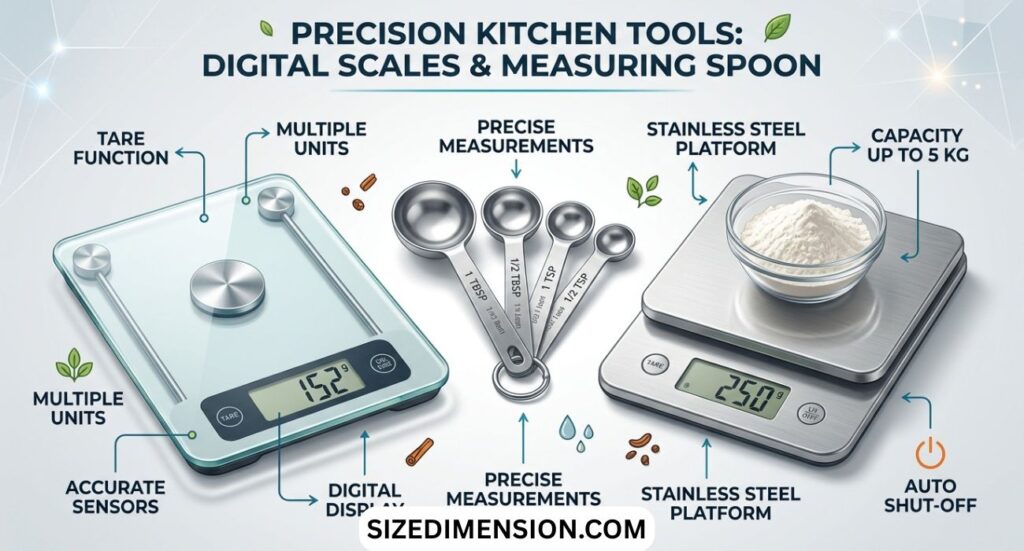
People often need weight without scale methods when traveling, cooking, or working on small projects. Fortunately, there are several practical ways to measure 10 grams using ordinary items.
Knowing how to weigh 10 grams improves confidence during cooking measurements, mailing, and weight estimation. While scales are ideal, these methods still provide useful approximations.
Using Kitchen Measuring Spoons
One of the easiest methods involves measuring spoons. For sugar, two teaspoons equal approximately 10 grams.
This approach works well because granulated sugar measurement is relatively consistent. However, grams to teaspoons conversions differ across ingredients because ingredient density varies.
A spoon of flour, salt, or cocoa may not weigh the same as sugar. This is why kitchen measuring guide charts are useful for measuring ingredients.
While spoons help with weight estimation, they should be viewed as approximations rather than exact solutions.
Using Common Household Items
Another practical method uses household weight references and common household objects.
Two nickels equal 10 grams exactly. Four pennies equal 10 grams. Ten paper clips and ten thumbtacks also come close. These objects serve as reference weights and help with measuring without a scale.
People can even create a simple balance scale using a ruler and pencil. By placing an object on one side and 10 gram objects on the other, they can estimate weight visually.
This DIY method shows that 10 gram measurement does not always require expensive equipment.
Using a Digital Kitchen Scale (Most Accurate)
The best solution remains a digital scale or kitchen scale.
A digital scale provides accurate weight measurement and removes guesswork. To use one properly, place the scale on a flat surface, add a container, and press the tare button to remove container weight. Then slowly add material until the display reads 10 grams.
Modern scales are affordable and extremely precise. For recipes, postage weight, and science activities, they outperform all other methods.
Some people ask whether a phone scale app can replace scales. While apps may estimate weight using sensors, they are usually less reliable than dedicated scales. For dependable results, a digital scale remains the preferred option.
Using Coins as Weight References
Coins are among the easiest tools for measuring without a scale because their weights are standardized. Two U.S. nickels equal exactly 10 grams, while four modern pennies also total 10 grams. This makes coins one of the most reliable household weight references for quick weight estimation.
Because coin weight is controlled during production, they provide dependable reference weights when a digital scale is unavailable. This method is especially helpful for beginners learning how to weigh 10 grams.
Using a DIY Balance Scale
A homemade balance scale can help you measure 10 grams using simple household materials. A ruler balanced on a pencil or pen can act as a basic weighing tool.
Place known 10 gram objects like coins or paper clips on one side and the unknown object on the other. When both sides balance evenly, the item is close to 10 grams. This method demonstrates practical grams measurement and teaches how traditional scales work.
Using Food Packaging Information
Many food packages include weight details that help with 10 gram measurement. Nutrition labels often list serving sizes in grams, allowing people to estimate portions without special tools.
For example, packaged snacks, nuts, or candies may state that one serving equals 10 grams or multiples of it. Reading labels improves food portion measurement and supports better cooking measurements and nutrition tracking.
Using Measuring Cups and Kitchen Guides
A kitchen measuring guide and measuring cup charts can assist with weight estimation when a scale is unavailable. Although cups and spoons measure volume rather than mass, conversion charts provide approximate gram values.
This method works best for common ingredients such as sugar, flour, and rice. Since ingredient density changes from food to food, using trusted grams to teaspoons and cup conversion charts improves accuracy during baking measurements and measuring ingredients.
Comparing With Pre-Weighed Household Objects
Another practical approach involves comparing an item with exact weight examples already available at home. Objects like ten paper clips, ten thumbtacks, or ten dollar bills can act as simple 10g household objects.
By holding and comparing objects side by side, people can improve weight estimation skills over time. This method may not replace a digital scale, but it helps people visualize 10 grams using familiar items.
Using Postal or Mailing Equipment
Mailing equipment can also help with accurate weight measurement. Many post offices and shipping stores provide access to scales for checking postage weight.
If you frequently mail envelopes or small packages, postal scales become useful kitchen tools outside the kitchen as well. Since shipping prices depend on exact weight, this method offers reliable results for 10 grams and other small weight measurements.
10 Grams vs. Other Common Weights
Comparing 10 grams with larger and smaller weights helps readers build a stronger understanding.
How Does 10 Grams Compare?
A good 10 grams comparison starts with 1 gram. Ten grams equals ten times that amount. Compared to 50 grams or 100 grams, it appears very small.
The table below makes common weight comparisons easier.
| Weight | Comparison to 10 Grams |
| 1 gram | 10 grams is ten times heavier |
| 10 grams | Baseline |
| 50 grams | Five times heavier |
| 100 grams | Ten times heavier |
| 1 ounce | About 28.35 grams |
| 1 pound | About 453.6 grams |
This chart helps explain 10 grams vs ounce and 10 grams vs pound relationships. Since 10 grams in ounces equals 0.35 oz, it is slightly more than one-quarter ounce but far less than half an ounce.
Likewise, 10 grams in pounds equals only 0.022 lb, proving how tiny this amount really is.
These common weight comparisons help Americans connect the metric system with the imperial system and better understand grams measurement.
Why Understanding 10 Grams Matters
Understanding small weights helps people in many daily activities. Things that weigh 10 grams give a clear idea of how light certain objects are. This knowledge supports cooking, mailing, crafts, and school work. Learning weight through real examples makes measurements easier and more practical for people of all ages and skill levels.
Many people see grams written on food labels or packages but do not understand their actual size. Knowing the feel and size of 10 grams builds confidence in handling small measurements. Real examples remove confusion and make learning more enjoyable. This basic knowledge becomes useful in everyday situations and simple household tasks.
Common Household Things That Weigh 10 Grams
Many household objects provide useful examples of 10-gram weight. Coins, paper clips, thumbtacks, and dollar bills are easy to find and compare. These items help people estimate weight without needing special tools. Their familiar size makes learning about grams much easier and more memorable in daily life.
These examples work as quick reference points when a scale is unavailable. People often use them for simple comparisons or rough estimates. Household objects create a practical learning method because they already exist around us. By using common items, understanding weight becomes faster, easier, and more connected to everyday routines.
Kitchen Items That Help Measure 10 Grams
The kitchen offers many simple ways to understand and estimate 10 grams. Sugar, flour, and almonds are common examples that help people learn weight. Measuring ingredients becomes easier when small amounts are familiar. These examples are useful for cooking and baking, where accurate portions often improve taste and texture.
Kitchen measurements depend on ingredient type and density. A spoon of sugar may not weigh the same as a spoon of flour. This difference teaches an important lesson about weight and volume. Learning through food examples gives practical experience and helps people understand measurements more clearly during meal preparation.
Coins as Reliable Weight References
Coins are among the most dependable examples for learning about small weights. Two nickels equal exactly 10 grams, making them simple and accurate references. Since coins follow strict manufacturing standards, their weight remains consistent. This reliability makes coins popular tools for quick comparisons and easy learning.
People often carry coins in pockets or keep them at home, so they are convenient measurement aids. Coins help students and beginners understand weight without confusion. Their familiar shape and size make them memorable examples. Using coins as references turns weight learning into a simple and practical experience.
Measuring Without a Digital Scale
A scale is useful, but people can still estimate 10 grams using everyday objects. Household items such as paper clips, coins, or sugar offer practical alternatives. These methods do not provide perfect accuracy, but they help with quick estimates. Learning these techniques builds confidence and supports everyday problem-solving skills.
Simple comparison methods teach observation and improve understanding of weight. People can compare items by holding them or using homemade balance tools. These techniques encourage practical thinking and make measurements feel less difficult. While scales remain best for precision, everyday methods still provide valuable support and learning opportunities.
See also: Things That Weigh 1gram
Learning Weight Through Everyday Examples
Learning through real objects helps people remember information more effectively. Everyday examples connect numbers with familiar experiences and improve understanding. Instead of seeing grams as confusing measurements, people begin to recognize them through objects they already know. This approach makes education simple, practical, and easier to enjoy.
Things that weigh 10 grams create strong visual and physical references. These examples support students, parents, and anyone curious about measurements. Small lessons learned through ordinary objects often stay memorable for a long time. Understanding weight through daily life makes knowledge more useful and easier to apply.
Frequently Asked Questions
What object weighs 10g?
Several things that weigh 10 grams can be found at home, including two U.S. nickels, four pennies, ten paper clips, or ten dollar bills.
These 10 gram objects work as simple and reliable weight reference examples.
How to weigh 10g at home?
You can measure 10 grams at home using a digital scale, measuring spoons, or common objects like coins and paper clips.
Two nickels or four pennies provide easy household weight references for measuring without a scale.
How much is 10g in weight?
10 grams equals 0.35 ounces, 0.022 pounds, or 0.01 kilograms in metric conversion terms.
It is a small 10g weight often used in cooking measurements, nutrition, and mailing.
How much does 10 grams look like?
To visualize 10 grams, imagine two nickels, about two teaspoons of sugar, or seven to ten almonds.
These everyday weight examples make how much is 10 grams easier to understand without special tools.
Conclusion
Understanding weight becomes easier when you use real-life examples. 10 Grams- Things that Weigh 10 grams helps you learn small measurements in a simple way. Items like nickels, paper clips, sugar, and almonds give clear ideas about weight. These objects help with cooking, school activities, mailing, and daily tasks. Learning these examples builds better understanding and confidence.
This guide makes 10 Grams- Things that Weigh 10 grams easy for everyone to remember. You do not always need a scale to understand small weights. Everyday objects can work as useful references and save time. With practice, you can estimate weight more accurately and use this knowledge in many parts of daily life.