
Dishwasher Dimensions: Standard Dishwasher Size (2026)
Dishwasher Dimensions are the measurements of a dishwasher’s width, height, and depth. They show how much space the appliance needs. These sizes help people choose the right dishwasher for their kitchen cabinets.
Buying a dishwasher with the wrong size can create problems. A few simple measurements can save time and money. Knowing the correct dimensions makes installation easier and stress-free.
Most standard dishwashers are about 24 inches wide, 24 inches deep, and 34–35 inches tall. Compact models use less space. Understanding dishwasher sizes helps homeowners make better choices.
Read this too: Kitchen Trash Can Dimensions: Size, Height (2026)
Standard Dishwasher Dimensions
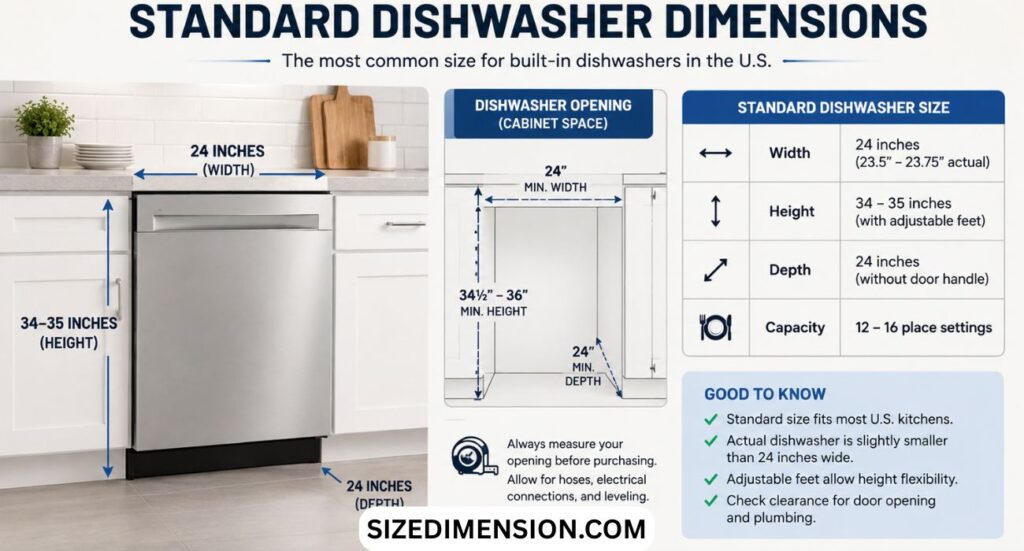
The first thing every homeowner should know is that most kitchens in the United States are designed around **standard dishwasher dimensions. Manufacturers build their appliances to fit common cabinet spaces, making replacement much easier during **kitchen remodeling projects or appliance upgrades.
A standard American dishwasher usually measures about 24 inches wide, 24 inches deep, and 34 to 35 inches high. These measurements are considered the standard **dishwasher dimensions in inches used throughout the country. Although every brand may differ slightly, these sizes allow the appliance to fit neatly under standard countertops and between surrounding **kitchen cabinets.
One important fact is that the actual appliance is normally a little smaller than the advertised size. For example, a **24 inch dishwasher may actually measure around 23.5 to 23.75 inches wide. This small difference creates enough room for easier **dishwasher fitting, proper leveling, and safe installation.
The following table shows the most common dishwasher sizes used in American homes.
| Dishwasher Type | Width | Depth | Height | Capacity |
| Standard Built-In | 24 in | 24 in | 34–35 in | 12–16 place settings |
| Compact Model | 18 in | 24 in | 34–35 in | 8–10 place settings |
| Oversized Model | 30–42 in | 24–25 in | 34–35 in | 16+ place settings |
These measurements are also used when planning **dishwasher cabinet dimensions, **kitchen appliance sizing, and overall kitchen layouts. Whether you are building a new kitchen or replacing an old appliance, checking your **dishwasher cabinet opening before shopping is always recommended.
Many homeowners mistakenly focus only on width. In reality, every successful installation depends on matching the **dishwasher opening width, **dishwasher opening height, and **dishwasher opening depth with the appliance specifications. Even a difference of half an inch can affect installation.
Standard Built-In Dishwasher Size Breakdown
A **standard dishwasher size is designed to fit neatly into the cabinet opening found in most American homes. Understanding each measurement separately helps you avoid buying the wrong appliance.
The **standard dishwasher width is approximately 24 inches. This size has become the industry standard because most kitchen cabinets are installed with a 24-inch opening. Since the appliance itself is slightly narrower, installers have enough room to slide the dishwasher into place and make final adjustments.
The **standard dishwasher height generally ranges between 34 and 35 inches. Most dishwashers include **adjustable dishwasher feet or **leveling feet, allowing installers to raise or lower the appliance until it sits perfectly beneath the countertop. This adjustment also prevents vibration and improves cleaning performance.
The **standard dishwasher depth is about 24 inches without considering the handle. Modern models with larger handles may extend slightly beyond surrounding cabinets, so always check the complete **dishwasher installation dimensions before making a purchase.
Many homeowners compare different brands using a **dishwasher size chart, which makes shopping much easier. These charts usually include appliance width, height, depth, recommended **dishwasher rough opening, and minimum **dishwasher installation clearance.
| Measurement | Standard Size |
| Width | 24 inches |
| Height | 34–35 inches |
| Depth | 24 inches |
| Recommended Opening Width | 24 inches |
| Recommended Opening Height | 34.5–36 inches |
| Recommended Opening Depth | 24 inches |
It is also important to understand the difference between appliance dimensions and installation space. Manufacturers publish **built-in dishwasher dimensions, but installers focus on the available **dishwasher opening size inside the cabinets. They also consider **countertop height, flooring thickness, and surrounding cabinetry before beginning installation.
If you are replacing an older appliance, never assume the previous dishwasher followed today’s **standard kitchen appliance dimensions. Older homes sometimes have unusual openings due to custom cabinetry or previous remodeling work. Taking fresh **dishwasher measurements before purchasing a replacement helps avoid unnecessary surprises.
Whether you are buying your first dishwasher or planning a complete kitchen renovation, understanding these measurements makes selecting the right appliance much easier. Proper planning also reduces installation costs and ensures your dishwasher operates safely for many years.
Non-Standard Dishwasher Sizes Explained
Although most American homes use a 24 inch dishwasher, not every kitchen has enough room for a full-size model. Some apartments, condos, tiny homes, and older houses require a different dishwasher size. Fortunately, manufacturers offer several alternatives to meet different kitchen layouts and family needs.
The most common alternative is the 18 inch dishwasher. These compact dishwasher dimensions usually measure 18 inches wide, 24 inches deep, and 34 to 35 inches high. Even though the appliance is narrower, it still fits beneath a standard countertop and connects to the same plumbing and electrical systems as a full-size model. Most compact models can wash between 8 and 10 dishwasher place settings, making them an excellent choice for couples or small families.
Some homeowners prefer an oversized dishwasher for large households. These premium appliances range from 30 to 42 inches wide and offer greater dishwasher interior capacity than standard models. They are commonly installed in luxury kitchens where custom kitchen cabinet dimensions have been designed specifically for larger appliances. Because these units are wider than standard openings, they are not suitable for most existing homes without cabinet modifications.
| Dishwasher Type | Width | Depth | Height | Typical Capacity |
| Compact | 18 in | 24 in | 34–35 in | 8–10 place settings |
| Standard Built-In | 24 in | 24 in | 34–35 in | 12–16 place settings |
| Oversized | 30–42 in | 24–25 in | 34–35 in | 16+ place settings |
| Countertop | Varies | Varies | Varies | 2–6 place settings |
Many people ask whether 20-inch or 22-inch dishwashers are available. In the United States, these are generally not standard products. Most manufacturers only produce 18-inch and 24-inch built-in models. If your opening falls between these sizes, a contractor can often install filler strips or adjust the cabinets during dishwasher replacement size planning.
How to Measure Your Space for a Dishwasher
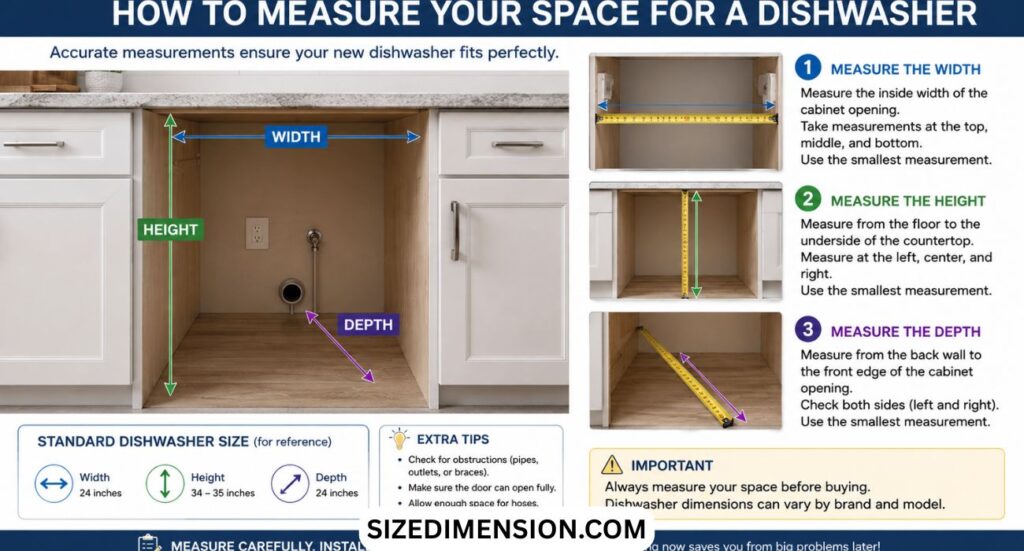
Buying the correct appliance starts with accurate measurements. A careful dishwasher measuring guide helps you avoid installation problems and ensures your new dishwasher slides into place without damaging your cabinets. Before shopping, always measure for dishwasher installation using a reliable tape measure and record every dimension carefully.
When checking your kitchen, focus on the available dishwasher cabinet opening instead of measuring your old appliance. Previous owners may have installed filler strips, changed the flooring, or modified the surrounding cabinets. Fresh dishwasher opening measurements provide much more accurate information.
Step 1 – Measuring Dishwasher Opening Width
Begin by measuring the inside distance between the two surrounding cabinets. This is your dishwasher cabinet opening width and one of the most important measurements during installation.
Take one measurement near the front and another near the back of the opening. Older kitchen cabinets sometimes shift over time, creating slightly different widths. If your numbers do not match, always use the smaller measurement when selecting a dishwasher.
Most standard installations require an opening close to 24 inches. Because the actual appliance is slightly smaller, installers have enough room for proper dishwasher fitting while still keeping the unit secure.
Step 2 – Measuring Dishwasher Opening Height
Next, measure from the finished floor to the underside of your countertop. This gives you the dishwasher cabinet opening height. Repeat the measurement at both the front and back because floors are not always perfectly level.
Modern dishwashers include adjustable dishwasher feet, allowing installers to fine-tune the height during installation. These adjustments help create a level appliance while matching the surrounding countertop height.
If you plan to install new tile, hardwood, or vinyl flooring, include that extra thickness in your calculations. Many installation problems occur because homeowners forget to account for future flooring changes.
Step 3 – Measuring Dishwasher Opening Depth
The final step is measuring the dishwasher cabinet opening depth. Place your tape measure against the back wall and extend it to the front edge of the cabinets.
A standard installation usually requires about 24 inches of depth, but you should also consider the dishwasher handle depth if the model has a large bar handle. Some premium dishwashers extend slightly beyond the cabinet face.
While measuring, remember to leave enough room for the dishwasher door to open comfortably. Proper dishwasher opening depth helps ensure smooth operation and simplifies future maintenance. Following this simple process creates accurate installation measurements and makes your appliance purchase much more successful.
The time spent measuring carefully today can prevent costly installation mistakes tomorrow. Many professionals consider accurate measurements the most important step in any dishwasher buying guide, especially during kitchen renovation measurements or when replacing an older appliance.
Space Requirements Around Your Dishwasher
Correct dishwasher dimensions are only one part of a successful installation. A dishwasher also needs enough surrounding space to operate properly. Proper dishwasher space requirements allow the door to open fully, provide access for loading and unloading, and make future repairs easier. Without enough room, even a correctly sized appliance may create problems with cabinets, walls, or kitchen traffic.
During dishwasher installation, professionals check more than just the cabinet opening. They consider dishwasher clearance, nearby walls, countertop placement, and utility connections. A dishwasher that is too close to surrounding objects may create noise, prevent the racks from sliding out completely, or make maintenance difficult.
Most standard installations require enough open space in front of the dishwasher for comfortable use. This area is especially important in busy kitchens where people frequently move between counters, islands, and appliances. Proper planning creates a safer and more convenient kitchen environment.
Door Swing Clearance
The dishwasher door swing is an important measurement that many homeowners forget. A dishwasher door must open completely so users can pull out the racks, load dishes, and remove clean items easily.
Most experts recommend leaving around 27 to 30 inches of open floor space in front of the dishwasher. This area provides enough room for the door to lower fully and allows a person to stand comfortably while loading dishes.
The required dishwasher door clearance depends on the kitchen layout. If a dishwasher is installed directly across from an island, refrigerator, or another cabinet, the available space should be measured carefully. A narrow walkway may make daily use uncomfortable.
For example, imagine a homeowner installing a new dishwasher beside a kitchen island. The appliance fits perfectly inside the cabinet opening, but when the door opens, it blocks the walkway completely. This problem could have been avoided by checking the dishwasher door swing clearance before installation.
A professional installer always checks the complete layout, not just the appliance size. Good planning ensures the dishwasher works naturally with the rest of the kitchen.
Side and Corner Clearances
Side spacing is another important part of dishwasher clearance requirements. Although a dishwasher usually fits tightly between cabinets, certain locations require additional room.
A dishwasher installed beside a wall or in a corner needs extra space so the door can open without hitting the wall or nearby cabinet handles. In these situations, installers often recommend about 1 to 2 inches of dishwasher side clearance.
Corner installations require special attention because the dishwasher door may hit the adjacent cabinet when opened. This can prevent the bottom rack from sliding out completely and may damage the cabinet finish over time.
Before installation, homeowners should check the relationship between the dishwasher, nearby drawers, cabinet doors, and kitchen appliances. Proper spacing improves usability and protects surrounding materials.
Read also: Average Living Room Size: Dimensions (2026)
Top Clearance and Countertop Gap
The area between the dishwasher and countertop is another important consideration. A properly installed dishwasher should sit securely beneath the counter while maintaining the correct countertop gap.
Most dishwashers are slightly shorter than the cabinet opening because the adjustable feet allow installers to raise the appliance into position. This small gap helps with leveling and prevents unnecessary pressure against the countertop.
A dishwasher should not be forced tightly against the underside of the counter. Excess pressure can increase vibration and create unwanted operating noise. Proper adjustment using leveling feet creates a stable installation.
For homes with stone countertops, installers often pay extra attention because these materials cannot always be drilled or adjusted easily. Correct planning during installation protects both the dishwasher and expensive countertop materials.
Utility Connection Considerations
Before buying a dishwasher, always check the location of your utility connections. A dishwasher requires water supply, drainage, and electricity, and these connections must have enough space behind or beside the appliance.
The main connections include dishwasher plumbing connections, dishwasher drain connection, and dishwasher electrical connections. If these utilities are placed incorrectly, they may reduce the available depth and prevent the dishwasher from sitting properly.
For example, an electrical outlet installed directly behind the dishwasher can push the appliance forward and stop it from sitting flush with the cabinets. In some cases, an electrician may need to move the outlet to provide proper installation space.
A professional dishwasher installation guide always recommends checking utility locations before purchasing a new appliance. Planning these details early helps avoid delays, additional costs, and installation problems.
Dishwasher Size Variations and Capacity
Exterior measurements do not always tell the full story about a dishwasher. Two appliances with identical outside dimensions can have different internal layouts and different washing abilities. Understanding dishwasher capacity helps homeowners choose the right model for their family.
Most standard residential dishwashers hold between 12 and 16 place settings. A place setting includes common dinner items such as plates, bowls, cups, glasses, and silverware. Families who cook frequently may prefer a larger interior design with flexible racks and additional storage options.
Modern dishwashers focus on maximizing interior space without increasing outside dimensions. Features such as adjustable racks, hidden controls, and special loading systems allow manufacturers to improve performance while keeping standard appliance dimensions.
| Dishwasher Type | Average Capacity | Best For |
| Compact Dishwasher | 8–10 place settings | Apartments and small households |
| Standard Dishwasher | 12–16 place settings | Most American families |
| Large Dishwasher | 16+ place settings | Large households and frequent cooking |
Choosing the right capacity depends on your lifestyle, not only the size of your kitchen. A smaller home may benefit from a compact model, while a larger family may need a full-size dishwasher with advanced interior features.
How Interior Layout Affects Capacity
The inside design of a dishwasher greatly affects how many dishes it can hold. A standard model with smart rack placement can sometimes fit more items than an older appliance with the same outside measurements.
A third rack dishwasher is one of the most popular improvements in modern models. This extra rack sits above the traditional upper rack and provides space for utensils, cooking tools, and small items. By moving these items upward, the lower racks have more room for large plates and cookware.
Adjustable racks also improve flexibility. Users can lower or raise sections depending on whether they need to wash tall glasses, large pots, or baking dishes. These features increase the practical dishwasher interior capacity without changing the outside size.
Tall Tub vs. Standard Tub Height
When comparing different dishwasher dimensions, many buyers focus only on the outside measurements and overlook the internal design. The difference between a tall tub dishwasher and a standard tub dishwasher can greatly affect how much you can wash in one cycle.
A tall tub dishwasher uses the available interior space more efficiently. Although the outside dishwasher height remains similar to standard models, the inside cavity extends lower because there is less unused space beneath the dishwasher. This design provides more room for large pots, pans, mixing bowls, and oversized cooking items.
A standard tub dishwasher has a slightly smaller interior area because of its traditional construction. These models still clean dishes effectively, but they may have less flexibility when washing large cookware. Many older dishwashers use this design, while newer models often prefer tall tub technology.
The choice between these two designs depends on your household needs. If you frequently cook large meals or wash baking trays, a tall tub model is usually the better option. If your household produces fewer dishes, a standard tub dishwasher may provide enough capacity.
Modern manufacturers combine tall tub designs with features like adjustable racks and a third rack dishwasher system. These improvements allow homeowners to maximize space while maintaining standard built-in dishwasher dimensions.
Panel-Ready Models and Depth Adjustments
A panel-ready dishwasher is designed for homeowners who want their appliance to blend with their kitchen cabinets. Instead of using a traditional stainless steel front, these models allow a custom cabinet panel to be attached to the dishwasher door.
The main benefit of a panel-ready design is appearance. A panel-ready dishwasher can create a seamless kitchen design where the appliance looks like part of the cabinetry. This style is popular in modern kitchens, luxury homes, and professional kitchen remodeling projects.
However, custom panels affect the overall measurements. The added cabinet material can increase the front thickness of the appliance. Homeowners should check panel ready dishwasher dimensions before installation because the additional depth may affect how the dishwasher aligns with surrounding cabinets.
A standard dishwasher may sit nearly flush with cabinets, but a panel-ready model requires careful planning. Installers consider the cabinet thickness, door movement, and available space when completing the installation.
A properly installed integrated dishwasher provides both function and style. It combines the cleaning power of a modern appliance with the appearance of custom cabinetry.
Questions and Installation Tips
Choosing the correct dishwasher involves more than selecting a model that fits the opening. Many homeowners face installation challenges because kitchens vary in design, age, and construction. Understanding common problems helps you make better decisions before purchasing.
A successful installation requires accurate dishwasher measurements, proper dishwasher installation dimensions, and attention to details such as plumbing, electrical access, and cabinet alignment.
Many professionals recommend following a simple rule: measure the space first, then choose the appliance. Buying a dishwasher before checking the opening can lead to expensive modifications or replacement problems.
Does My Dishwasher Need to Be Flush with Cabinets?
A dishwasher does not always need to be perfectly flush with surrounding cabinets, but many homeowners prefer this appearance because it creates a cleaner kitchen design. A flush mount dishwasher sits evenly with the cabinet face and provides a smooth, built-in appearance.
The type of handle affects how far the dishwasher extends outward. Models with large bar handles may stick out beyond the cabinets, while recessed handles create a flatter appearance.
An integrated dishwasher with hidden controls provides an even more seamless look. These models keep the buttons on the top edge of the door, allowing the front surface to match the surrounding cabinetry.
The final installation depends on your kitchen design preferences. Some homeowners prioritize appearance, while others focus mainly on capacity, price, and performance.
What If My Opening Doesn’t Match Standard Sizes?
Not every home has a perfect 24-inch opening. Older houses, custom kitchens, and previous renovations may have unusual cabinet measurements. Fortunately, several solutions are available.
If the opening is slightly wider than the dishwasher, installers can use filler strips to close small gaps. These strips are matched with the existing cabinet finish to maintain a professional appearance.
If the opening is too small, cabinet modifications may be required. A professional carpenter can adjust the space to fit a larger appliance, especially during a complete kitchen renovation.
For very limited spaces, an 18 inch dishwasher, portable dishwasher, or countertop dishwasher may provide a practical alternative. These options allow homeowners to enjoy dishwasher convenience without major construction work.
Before choosing a solution, complete accurate dishwasher opening measurements and compare them with the manufacturer’s specifications.
Important Installation Tips from Professionals
Professional installers follow several important steps to ensure a dishwasher works correctly. The first step is always checking the empty opening rather than depending on the measurements of an old appliance.
Older units may have used spacers, modified cabinets, or different installation methods. Measuring the current space provides accurate information for selecting the correct replacement.
Professionals also check the flooring underneath the dishwasher. Added layers of tile, vinyl, or hardwood can reduce available height and affect the fit. These details are especially important during kitchen renovation measurements.
Before installation begins, always verify the location of water lines, drainage pipes, and electrical outlets. Correct dishwasher plumbing connections, dishwasher drain connection, and dishwasher electrical connections prevent leaks and electrical problems.
Keeping the manufacturer’s installation manual is also helpful. Every model has specific requirements for spacing, connections, and mounting. Following these instructions protects your warranty and improves long-term performance.
Dishwasher Size Chart for Quick Comparison
A dishwasher size chart helps homeowners compare common models before buying. It shows standard dishwasher width, standard dishwasher height, standard dishwasher depth, and overall dishwasher capacity in one place. Comparing these measurements makes choosing the right appliance easier while reducing installation mistakes during kitchen upgrades and ensuring a proper fit every time.
Whether replacing an old appliance or planning a new kitchen, reviewing a dishwasher size chart saves time and money. It clearly explains differences between compact, standard, and oversized models. Homeowners can quickly compare dishwasher dimensions, dishwasher measurements, and interior capacity to select the best dishwasher for their available kitchen space confidently.
Common Dishwasher Installation Mistakes
Many homeowners rush into dishwasher installation without checking dishwasher cabinet opening width, dishwasher cabinet opening height, or dishwasher cabinet opening depth. Small measuring errors often cause expensive delays, poor fitting, or unnecessary cabinet changes. Taking accurate measurements before shopping prevents most installation problems and improves the final appearance of your finished kitchen.
Another common mistake is ignoring dishwasher installation clearance and nearby utility connections. Water lines, electrical outlets, and drain hoses require adequate room behind the appliance. Following a complete dishwasher fitting guide helps homeowners avoid leaks, difficult repairs, and expensive modifications after the dishwasher has already been installed successfully.
Best Dishwasher Size for Different Households
The ideal dishwasher size depends on your family’s daily needs. Couples and small households usually benefit from an 18 inch dishwasher, while larger families often prefer a 24 inch dishwasher because it holds more place settings. Choosing the correct capacity improves cleaning efficiency and reduces the number of wash cycles every week.
Families who cook frequently may appreciate a tall tub dishwasher with flexible racks and greater dishwasher interior capacity. Smaller homes with limited kitchen space can choose a compact dishwasher or countertop dishwasher. Selecting the right appliance ensures convenience while making the best use of available kitchen space every day.
Built-In Dishwasher vs. Portable Dishwasher
A built-in dishwasher installs permanently beneath the countertop and connects directly to household plumbing. It offers larger dishwasher capacity, quieter operation, and a cleaner appearance. This type is the preferred choice for most American homes because it blends naturally with surrounding kitchen cabinets and modern kitchen designs beautifully.
A portable dishwasher provides flexibility for renters or homeowners who cannot remodel their kitchens. It connects temporarily to the sink and rolls away after use. Although it usually offers less capacity than an under counter dishwasher, it remains an excellent option for kitchens without permanent installation space available.
Why Accurate Dishwasher Measurements Matter
Accurate dishwasher measurements ensure your appliance fits correctly without damaging cabinets or countertops. Measuring the dishwasher opening size carefully helps avoid costly returns and installation delays. Even small differences in width, height, or depth can prevent the dishwasher from fitting properly inside the available cabinet opening during installation.
Correct installation measurements also improve appliance performance and safety. A properly fitted dishwasher reduces vibration, protects surrounding cabinets, and allows enough room for maintenance. Spending a few extra minutes measuring before shopping helps homeowners avoid expensive mistakes while ensuring years of reliable dishwasher performance in everyday use.
Choosing the Right Dishwasher for Your Kitchen
Selecting the perfect dishwasher begins with understanding your available space and daily washing needs. Compare built-in dishwasher dimensions, dishwasher specifications, and cleaning capacity before making a purchase. A properly sized dishwasher provides better performance while fitting neatly beneath your countertop without unnecessary cabinet modifications or additional installation costs later.
Also consider future maintenance, energy efficiency, and kitchen appearance before choosing a model. Whether selecting a panel-ready dishwasher, compact dishwasher, or full-size appliance, matching the dishwasher to your kitchen layout creates a cleaner installation, better functionality, and long-term satisfaction for every member of your household.
See also: Soup Can Dimensions: Size, Height (2026)
FAQ’s
What size is a standard size dishwasher?
A standard dishwasher in the USA is 24 inches wide, 24 inches deep, and 34–35 inches tall. It fits the standard opening found in most kitchen cabinets.
What are the dimensions of a full-size dishwasher?
A full-size dishwasher typically measures 24 inches (W) × 24 inches (D) × 34–35 inches (H). It usually holds 12 to 16 place settings.
Is 60cm a standard dishwasher size?
Yes, 60cm (23.6 inches) is the standard dishwasher size in many European countries. It is very close to the U.S. standard 24-inch dishwasher.
Are all 24 inch dishwashers the same size?
No. Most 24-inch dishwashers are slightly smaller than 24 inches, usually 23.5–23.75 inches wide, to allow easy installation inside a standard cabinet opening.
Conclusion
Dishwasher Dimensions help you choose the right appliance for your kitchen. A standard dishwasher usually measures 24 inches wide, 24 inches deep, and 34–35 inches tall. Accurate measurements prevent installation problems and save money. Checking the width, height, and depth before buying helps your dishwasher fit perfectly and work properly.
Choosing the correct dishwasher size makes your kitchen more useful and comfortable. Compact, standard, and large models offer different options for every home. Careful planning, proper measurements, and professional installation create better results. Understanding dishwasher sizes helps homeowners make smart choices and enjoy a reliable appliance for many years.