Soup Can Dimensions: Size, Height (2026)
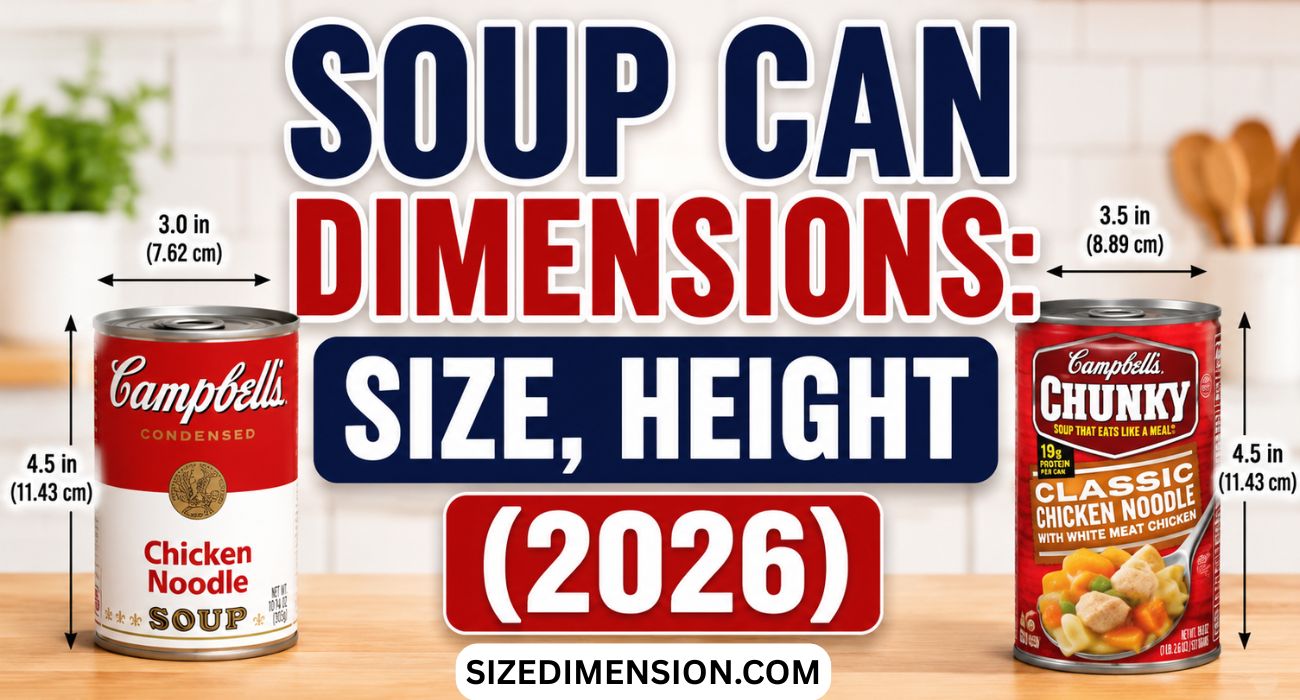
Soup Can Dimensions describe the standard size, height, and diameter of a soup can. These measurements help you understand how much soup a can holds. They also make shopping, cooking, and storage much easier.
Many soup cans look the same, but their sizes can be different. A few extra ounces or a wider can can change your recipe. Learning these measurements helps you choose the right can every time.
Soup Can Dimensions: Size, Height include measurements in inches and centimeters. Most condensed and ready-to-serve soup cans follow common industry sizes. This guide explains those sizes with simple facts and easy examples for everyday use.
Read this also: Beer Can Dimensions: Guide to Size, Height
Complete Soup Can Size Chart
The following table shows the most common American soup can sizes found in grocery stores, restaurants, and food service operations. These measurements are industry standards, although slight manufacturing differences may occur between brands.
| Can Code | Can Type | Diameter | Height | Capacity | Common Use |
| 300×407 | Condensed Soup | 3 in | 4.5 in | 10.5–10.75 oz | Home cooking |
| 307×409 | Ready-to-Serve Soup | 3.5 in | 4.5 in | 18–19 oz | Single meals |
| Small Can | Individual Soup | 2.6 in | 4 in | 7–8 oz | Lunch portions |
| #2.5 Can | Family Size | 4.01 in | 4.11 in | 28 oz | Family meals |
| #5 Can | Large Format | 5.125 in | 5.625 in | 51 oz | Restaurants |
| #10 Can | Commercial | 6.25 in | 7 in | 100 oz | Food service |
This Soup Can Sizes Chart gives a quick overview of the most popular cans available in the United States. It also serves as a useful soup can capacity chart when comparing products for home kitchens or commercial food preparation.
Standard Soup Can Dimensions and Sizes
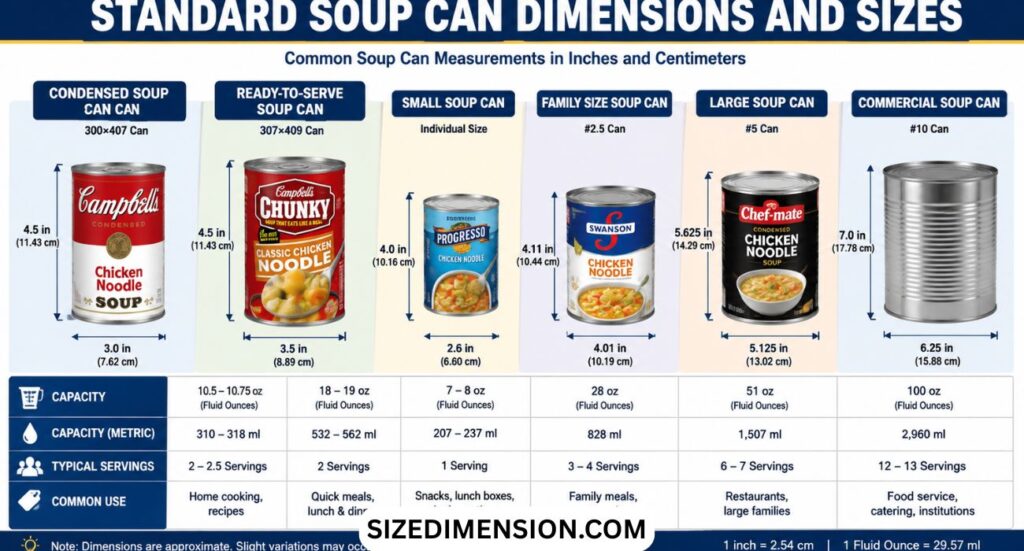
The majority of canned soups sold in the United States follow standard industry measurements. These sizes help manufacturers package products efficiently while allowing stores to stack and display cans neatly on shelves. Standard sizes also simplify shipping because every manufacturer follows similar standard can sizes.
Although flavors and ingredients differ, most soup brands use only a few common Soup Can Measurements. The biggest differences are found in the diameter and capacity rather than the height. Understanding can diameter and height helps consumers compare brands, estimate servings, and organize pantry shelves more effectively.
Condensed Soup Can Dimensions
A Condensed Soup Can is the most familiar can found in American kitchens. It usually measures about 3 inches in diameter and 4.5 inches in height, making it one of the most recognizable examples of standard soup can dimensions. This size is known in the packaging industry as the 300×407 Can, a code that identifies the can’s body diameter and height.
The average condensed soup can size holds between 10.5 and 10.75 Fluid Ounces before water or milk is added. Because condensed soup is concentrated, it requires dilution before serving, allowing manufacturers to use smaller packaging while still producing multiple servings.
These Soup Can Specifications make condensed soup easy to store in kitchen cabinets. Since the cans have a compact shape, they fit comfortably on most pantry shelves and are popular for Kitchen Organization and long-term Pantry Organization.
The classic red-and-white Campbell’s label has made this can one of the most recognizable food packages in the country. Many private-label brands follow exactly the same dimensions because using the same food can dimensions helps simplify packaging, transportation, and shelf display.
Ready-to-Serve (Chunky) Soup Can Dimensions
A Ready-to-Serve Soup Can is slightly larger than a condensed soup can because the soup does not require additional water. These cans generally measure 3.5 inches in diameter and 4.5 inches tall, following the 307×409 Can industry standard.
The larger diameter increases the overall Soup Can Capacity, allowing these cans to hold between 18 and 19 Fluid Ounces. Since the soup is already prepared, consumers simply heat and serve it without mixing additional ingredients.
Many popular brands, including Campbell’s Chunky soup can size, Progresso, and several supermarket brands, use these measurements. The wider body also accommodates soups filled with vegetables, pasta, potatoes, beans, or large meat pieces that would not easily fit inside a smaller condensed soup container.
Because of their greater volume, ready-to-serve soup can dimensions make these products ideal for quick lunches or dinners. One can often provides two moderate Soup Serving Size portions, depending on the recipe and appetite.
Small Soup Can Sizes
Smaller soup cans are designed for convenience and portion control. These compact containers usually measure 2.6 inches in diameter and about 4 inches high, holding approximately 7 to 8 ounces of soup.
Many companies sell these smaller cans for children’s lunches, travel meals, or light snacks. Their compact shape fits easily into lunch bags, office refrigerators, and small pantry shelves, making them excellent for cabinet storage for soup cans and everyday canned food storage.
Although these cans contain less soup, they still follow standard manufacturing practices. Their Soup Container Dimensions are carefully designed to maximize storage efficiency while protecting the food during shipping.
The smaller format is also useful for households that prefer reducing food waste. Instead of opening a larger can and storing leftovers, one small can often provides exactly the right amount for one meal. This makes them practical for Recipe Preparation, portion control, and daily Meal Planning.
Popular Soup Can Dimensions by Brand
Most manufacturers follow similar industry standards, but each company may make small adjustments to its packaging depending on the product line. These differences are usually only a fraction of an inch, yet they can slightly affect Soup Can Measurements, storage space, and serving capacity. Understanding these variations helps shoppers compare brands and choose the right can for recipes or pantry shelves.
Campbell’s Soup Can Dimensions
The Campbell’s Soup Can is considered the benchmark for canned soup in the United States. The company’s condensed soups typically measure 3 inches in diameter and 4.5 inches in height, matching the 300×407 Can standard used throughout the food industry.
The famous condensed soups usually contain 10.75 Fluid Ounces before preparation. Once water or milk is added, the soup produces approximately two and a half servings, making it a popular choice for families and individuals alike.
The Campbell’s condensed soup can dimensions have remained remarkably consistent for decades. This consistency allows customers to rely on familiar sizing when organizing shelves, purchasing storage bins, or following recipes that specify one can of soup.
Campbell’s Chunky soups use a larger container that measures approximately 3.5 inches in diameter and 4.5 inches tall. The Campbell’s Chunky soup can size holds around 18.6 to 19 ounces, making it suitable for hearty meals containing meat, vegetables, noodles, and beans.
Other Major Brand Dimensions
Most major soup companies follow similar packaging standards because using common Soup Packaging Dimensions improves manufacturing efficiency and allows retailers to display products neatly.
Progresso soups generally use the same dimensions as other ready-to-eat products. Their cans measure about 3.5 inches wide and 4.5 inches high, with capacities between 18 and 19 ounces. These measurements closely match standard canned soup dimensions found across American supermarkets.
Amy’s Organic soups are packaged in cans that are very similar in size to Campbell’s and Progresso products. Their containers maintain nearly identical Soup Can Diameter and height, making them easy to store alongside other brands.
Pacific Foods often packages soup in cartons, but several canned products also follow standard Soup Can Size measurements. These products are designed to fit existing retail shelves and shipping boxes without wasting space.
Store-brand soups sold by Walmart, Kroger, Target, Costco, and other retailers usually match the same Soup Can Dimensions as national brands. This standardization allows manufacturers to use existing production equipment while ensuring customers receive familiar serving sizes.
Large Format Soup Can Dimensions
Not every soup can is designed for home kitchens. Restaurants, schools, hospitals, hotels, and catering businesses often purchase larger containers because they reduce packaging waste and lower food costs. These larger cans are commonly known as Commercial Soup Can sizes or Food Service Can sizes.
Progresso Soup Can Dimensions
Progresso soups are among the most popular ready-to-eat soups in America. Their cans typically measure 3.5 inches in diameter and 4.5 inches in height, providing a capacity of approximately 19 ounces.
The larger container allows Progresso to include generous amounts of vegetables, pasta, rice, chicken, beef, or seafood without overcrowding the can. These measurements also make Progresso an excellent comparison in any soup can comparison guide.
Amy’s Organic Soup Can Dimensions
Amy’s Organic soups generally follow industry standards for ready-to-serve soups. Most cans measure around 3.5 inches wide and 4.5 inches tall, with capacities ranging between 14 and 18 ounces, depending on the recipe.
Although ingredients vary, the company maintains consistent Soup Can Volume across many products. These standardized dimensions simplify shipping and shelf organization while providing customers with predictable serving sizes.
Pacific Foods Soup Container Dimensions
Pacific Foods is best known for boxed soups, but its canned varieties also follow standard Soup Container Dimensions. Most canned products measure close to 3.5 inches in diameter and 4.5 inches high, making them compatible with typical pantry shelves.
The company focuses on premium soups that often contain rich broths and natural ingredients, yet the packaging still follows familiar industry measurements for easy storage and transportation.
Store Brand Soup Can Dimensions
Private-label soups sold under supermarket brands closely match the dimensions used by national manufacturers. Most condensed varieties measure 3 inches by 4.5 inches, while ready-to-serve versions measure approximately 3.5 inches by 4.5 inches.
Because retailers often use the same production facilities as major brands, customers can expect nearly identical Soup Can Measurements and capacities regardless of the label on the package.
Family Size Soup Can Dimensions
A Family Size Soup Can provides more servings for larger households. These containers usually correspond to the #2.5 Can standard and measure approximately 4.01 inches in diameter and 4.11 inches in height.
With a capacity of about 28 ounces, these cans are ideal for preparing meals for three to four people. They are commonly used for family dinners, casseroles, and recipes requiring multiple servings.
2.5 Can Dimensions
The #2.5 Can represents one of the most common medium-sized commercial containers. It measures approximately 4.01 inches across and 4.11 inches tall, holding about 28 ounces or 828 Milliliters.
Many restaurants and institutional kitchens use this size because it offers enough soup for several portions while remaining easy to handle and store.
10 Food Service Can Dimensions
The #10 Can is the largest soup can regularly used in commercial kitchens. This commercial soup can size measures approximately 6.25 inches in diameter and 7 inches in height, providing a capacity of about 100 ounces, or nearly 3 liters.
Schools, hospitals, restaurants, military kitchens, and catering companies rely on the #10 Can because it reduces packaging waste and allows chefs to prepare large quantities of soup efficiently. These large soup can dimensions are designed for professional food preparation rather than household use.
Read also: Things with Pics That Are 300 Feet Long or Tall
Soup Can Dimensions in Metric (Centimeters)
While inches are the standard unit of measurement in the United States, many manufacturers, international recipes, and commercial kitchens also use the metric system. Understanding Soup Can Dimensions in Centimeters makes it easier to compare products made in different countries and accurately convert measurements when following international recipes. These metric soup can dimensions are especially useful for chefs, food distributors, and anyone purchasing imported canned foods.
Converting Soup Can Measurements
Converting Soup Can Dimensions in Inches into metric units is simple because 1 inch equals 2.54 centimeters. Likewise, 1 Fluid Ounce equals approximately 29.57 Milliliters. These conversion factors allow you to compare can sizes regardless of the measurement system printed on the label.
For example, a standard condensed soup can measuring 3 inches in diameter converts to 7.62 centimeters. Its height of 4.5 inches becomes 11.43 centimeters. A ready-to-serve soup can with a 3.5-inch diameter converts to 8.89 centimeters, while its height remains 11.43 centimeters.
Using a reliable soup can conversion chart saves time when comparing imported products or calculating storage space. These conversions are also valuable during Recipe Preparation, especially when recipes specify metric measurements instead of inches or ounces. Whether you are measuring shelves, selecting containers, or estimating servings, understanding Cups to Ounces, centimeters, and Milliliters helps eliminate confusion.
Standard Sizes in Centimeters
The following table shows the most common Soup Can Dimensions in Metric alongside their approximate capacities.
| Can Type | Diameter (cm) | Height (cm) | Capacity |
| Condensed Soup | 7.62 cm | 11.43 cm | 310–318 ml |
| Ready-to-Serve Soup | 8.89 cm | 11.43 cm | 532–562 ml |
| Small Soup Can | 6.60 cm | 10.16 cm | 207–237 ml |
| #2.5 Can | 10.19 cm | 10.44 cm | 828 ml |
| #5 Can | 13.02 cm | 14.29 cm | 1,507 ml |
| #10 Can | 15.88 cm | 17.78 cm | 2,960 ml |
These measurements make it easier to compare common soup can sizes sold around the world. Whether shopping in the United States or overseas, knowing the metric dimensions ensures you choose the correct product for cooking, storage, or commercial use.
Soup Can Capacity and Serving Sizes
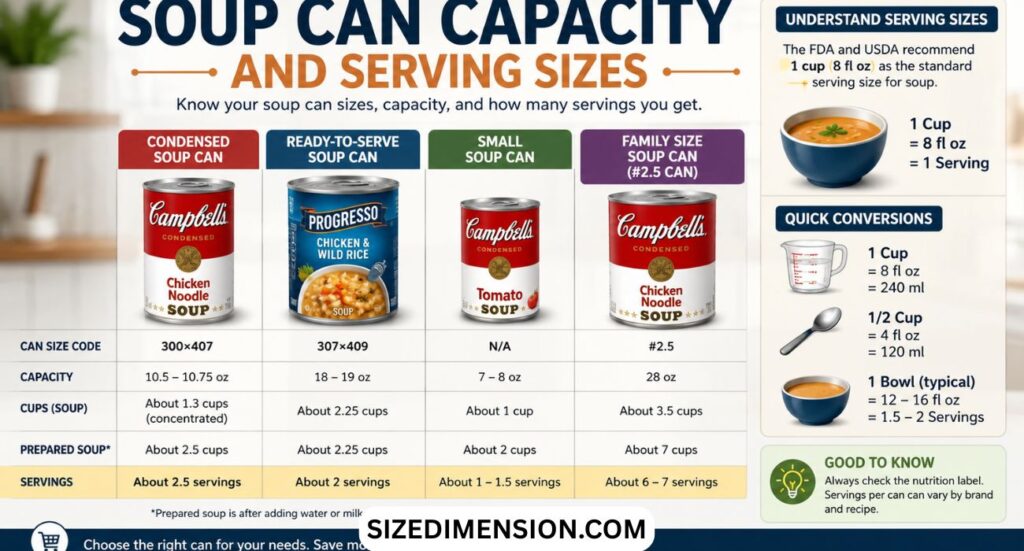
The physical size of a soup can is only part of the story. Soup Can Capacity determines how much food the container holds, while serving size tells you how much should be eaten in one meal. Although many people assume one can equals one serving, most canned soups actually contain multiple servings according to nutrition labels.
Understanding capacity also helps with budgeting, portion control, and Meal Planning. Larger cans often cost less per serving, while smaller cans reduce leftovers and make portion management easier for individuals.
Understanding Fluid Ounces vs Servings
One of the most common misunderstandings involves Fluid Ounces and servings. Fluid ounces measure volume, while a serving size is a nutrition guideline. A can may contain several servings even though it is sold as one package.
A condensed soup can usually contains 10.5 to 10.75 Fluid Ounces of concentrated soup. After adding the recommended amount of water or milk, the prepared soup yields approximately 20 ounces, enough for about 2½ standard servings.
A ready-to-serve soup can contains approximately 18 to 19 Fluid Ounces and generally provides two servings without adding liquid. Because the soup is already prepared, consumers simply heat it before eating.
Understanding this difference helps prevent confusion when reading labels or following recipes. Knowing the relationship between Soup Can Capacity, Soup Serving Size, and volume also improves meal planning for families and individuals.
Is One Can of Soup Equal to One Cup?
Many people ask whether one can of soup equals one cup, but the answer is no. One standard measuring cup contains 8 fluid ounces, while nearly every soup can holds more than that amount.
A condensed soup can contains approximately 10.75 ounces, which equals about 1.3 cups before preparation. After adding water or milk according to the directions, the total volume increases to roughly 2½ cups.
A ready-to-serve soup can usually contains 18 to 19 ounces, or about 2¼ cups of prepared soup. This is why many labels list two servings per container instead of one.
Understanding one can of soup equals how many cups is especially useful when recipes call for cups rather than canned soup. Accurate conversions improve consistency and reduce waste during cooking.
Standard Soup Serving Sizes
The USDA generally considers 8 fluid ounces, or 1 cup, to be the standard serving size of soup. Nutrition labels on canned soup are based on this guideline, although individual products may vary slightly.
Restaurant portions are often larger than the USDA recommendation. A cup of soup served as a side dish usually contains about 8 ounces, while a bowl commonly holds 12 to 16 ounces. Large entrée bowls may contain even more.
For home cooking, understanding Soup Can Serving Size makes recipes easier to follow. A condensed can prepared with water usually serves two to three people, while a ready-to-serve can comfortably feeds two adults. A Family Size Soup Can or Commercial Soup Can provides enough soup for larger groups and is often preferred for parties or family dinners.
Length and Circumference of Soup Cans
Besides height and diameter, two additional measurements are useful when comparing cans. Soup Can Length generally refers to the height of the can when it stands upright, while Soup Can Circumference measures the distance around the outside of the can.
These measurements are important for label printing, shipping cartons, manufacturing equipment, and pantry storage. They also help determine how much shelf space is required for different can sizes.
How Long is a Soup Can?
Although people often ask about the length of a soup can, manufacturers usually describe this measurement as the height. A standard condensed soup can measures approximately 4.5 inches from the bottom to the top rim. Ready-to-serve cans share nearly the same height, even though they have a larger diameter.
Small soup cans are slightly shorter at around 4 inches, while the #10 Can reaches approximately 7 inches in height. These measurements are helpful when planning shelf spacing or selecting containers for Pantry Organization.
Knowing the height of different cans also improves Kitchen Storage Solutions. Standard pantry shelves typically provide enough clearance for most household cans, while taller commercial containers require more vertical space.
Calculating Soup Can Circumference
The Soup Can Circumference is calculated using a simple mathematical formula:
Circumference = π × Diameter
A condensed soup can with a 3-inch diameter has a circumference of approximately 9.42 inches. A ready-to-serve soup can measuring 3.5 inches across has a circumference of roughly 11 inches.
The large #10 Can measures about 6.25 inches in diameter, giving it a circumference of approximately 19.6 inches. These values are important when producing labels because manufacturers must print labels that wrap perfectly around the can without overlapping or leaving gaps.
Understanding Soup Can Circumference also helps packaging companies design shipping materials and assists homeowners when arranging cans efficiently on pantry shelves.
Soup Can Dimensions for Storage
The size of a soup can directly affects how efficiently it can be stored. Whether you have a small kitchen pantry or a large storage room, understanding Soup Can Storage helps maximize available space while keeping canned foods organized and easy to access.
Cabinet Space Planning
Proper Cabinet Space Planning begins with knowing the dimensions of the cans you use most often. Standard soup cans measuring about 3 inches in diameter fit comfortably on most pantry shelves, allowing several cans to sit side by side without wasting space.
Ready-to-serve cans require slightly more width because of their larger diameter, while #2.5 Can, #5 Can, and #10 Can containers need much deeper shelves. Planning shelves around these dimensions improves Shelf Space Planning and creates a more efficient Kitchen Pantry Organization.
Organizing cans by size also makes it easier to rotate older products to the front, helping reduce food waste and ensuring older items are used before newer purchases.
Refrigerator Storage After Opening
Once a soup can has been opened, the remaining soup should be transferred to clean Food Storage Containers instead of being stored inside the original metal can. This practice helps preserve flavor and supports safe Refrigerator Storage.
A container with a capacity of about 2 cups works well for leftover condensed soup, while larger containers are better suited for ready-to-serve varieties. Glass or BPA-free plastic containers with tight-fitting lids are excellent choices because they help maintain freshness and prevent spills.
Properly stored soup generally remains fresh in the refrigerator for three to four days. Labeling containers with the storage date and keeping similar foods together further improves Kitchen Organization and ensures leftovers are used while they are still at their best.
Choosing the Right Soup Can Size for Your Needs
Selecting the correct Soup Can Size depends on your household, cooking habits, and serving requirements. Smaller cans work well for individuals, while medium and family-size cans provide enough portions for shared meals. Understanding capacities helps reduce waste, simplify shopping, and improve meal preparation throughout the week while keeping pantry supplies organized and available.
Recipes often specify a particular can size instead of listing exact liquid measurements. Knowing common Soup Can Dimensions allows accurate substitutions without changing the recipe’s flavor or consistency. Choosing the proper size also supports better budgeting, portion control, efficient pantry organization, and smoother cooking experiences for families of every household size daily.
How Soup Can Size Affects Recipes
Many casseroles, sauces, and slow cooker meals rely on a Condensed Soup Can as a key ingredient. Using a larger or smaller can than required may change the texture, flavor, and moisture level. Accurate Soup Can Measurements help recipes produce consistent results every time with less guesswork during cooking and preparation.
When replacing one soup variety with another, compare the Soup Can Capacity instead of simply matching the brand. A difference of several ounces can noticeably affect finished dishes. Measuring carefully ensures balanced ingredients, proper cooking times, improved flavor, and dependable results in both everyday meals and special family recipes every occasion.
Tips for Organizing Soup Cans in Your Pantry
Keeping soup cans arranged by size and expiration date makes everyday cooking easier and prevents forgotten products from remaining unused. Proper Soup Can Storage improves visibility, saves shelf space, and helps families quickly find the soups they need while preparing meals or creating shopping lists for future grocery trips together.
Grouping similar cans together also improves Pantry Organization and supports efficient Kitchen Organization. Rotating older cans to the front ensures they are used first, reducing waste and keeping food supplies fresh. Organized shelves create a cleaner kitchen while making inventory checks faster and more convenient throughout the entire year.
See also: Things with Pics That Are 14 Inches Long or Tall
FAQ’s
What is the height of a soup can?
A standard condensed soup can is approximately 4.5 inches (11.4 cm) tall. Most ready-to-serve soup cans also have a height of about 4.5 inches, although their diameter is larger.
What are the dimensions of a can of soup?
A typical condensed soup can measures 3 inches in diameter and 4.5 inches in height, while a ready-to-serve soup can measures about 3.5 inches in diameter and 4.5 inches tall.
What is the standard size of a can?
The standard soup can size in the United States is the 300×407 can, measuring approximately 3 inches in diameter, 4.5 inches in height, and holding 10.5–10.75 fluid ounces.
How tall is a can of beans in inches?
A standard can of beans is usually 4.25 to 4.5 inches tall with a diameter of about 3 inches, although the exact dimensions may vary slightly by brand and product size.
Conclusion
Understanding Soup Can Dimensions: Size, Height (2026) helps you choose the right soup for cooking, storage, and meal planning. You can compare different can sizes with confidence and organize your pantry more easily. Knowing the height, diameter, and capacity also makes recipe preparation simple and helps you buy the correct amount for every meal at home.
This guide to Soup Can Dimensions: Size, Height (2026) gives clear information about standard, family, and commercial soup cans. It also explains measurements in inches and centimeters with easy examples. You can use these details to improve kitchen organization, store soup safely, and prepare recipes with better accuracy every single day.