Beer Can Label Dimensions: Size, Height (2026)
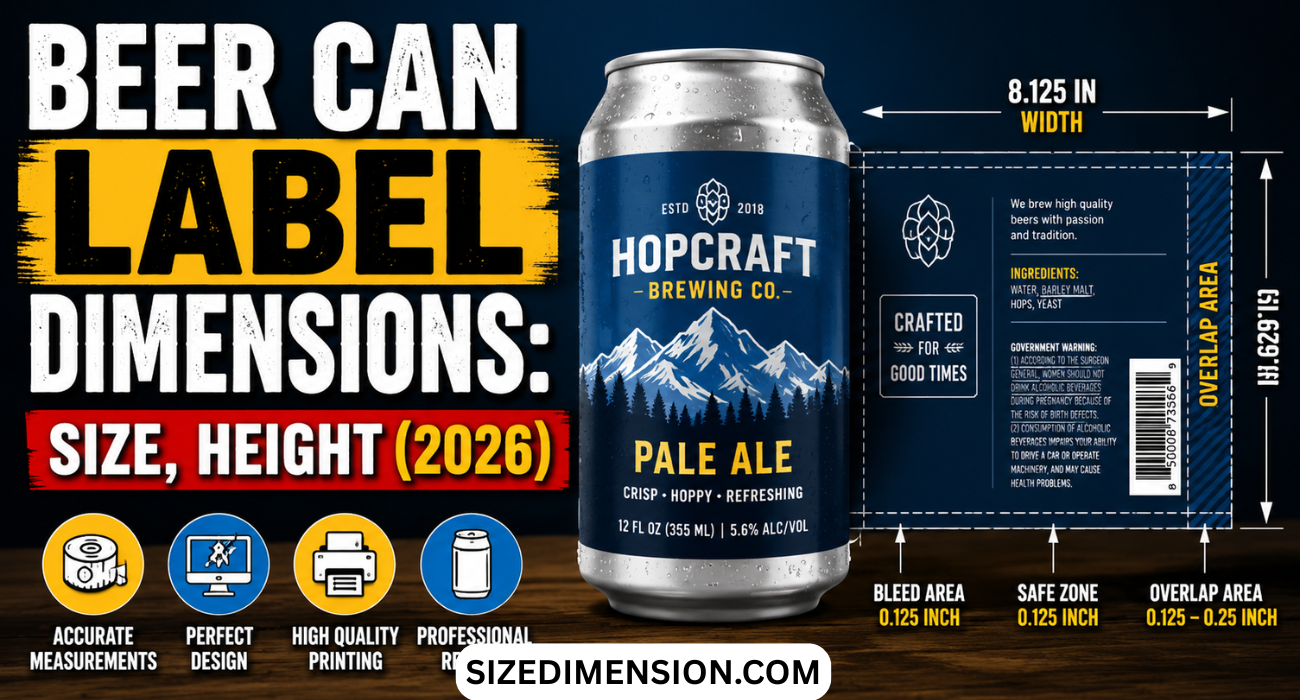
Beer Can Label Dimensions are the measurements of a label that fits around a beer can. They include the label width and height. The correct size helps the label fit neatly and look professional.
The right label size can make your beer stand out on the shelf. A poor fit can ruin even a great design. Learning the correct dimensions helps you avoid costly printing mistakes.
Most beer cans use standard label sizes, but some need custom measurements. The can size and shape affect the final label dimensions. This guide explains everything in easy English so you can choose the right label with confidence.
Read this too: 17 Things with Pic That Are 13 Inches Long
The Anatomy of a Beer Can Label
Every successful beer label design begins with understanding the different parts of a label. Although labels may appear simple, every measurement plays a role in appearance, readability, and production quality.
The first measurement is the beer can label width, which wraps around the can’s outside surface. This measurement depends on the beer can circumference, leaving a small opening where both ends of the label meet. The second measurement is the beer can label height, which determines how much of the can is covered vertically. Selecting the correct height prevents labels from touching the top rim or the bottom edge.
Professional beer packaging also includes technical areas that are invisible to customers but essential during printing. Every standard beer can label includes a label bleed that extends slightly beyond the trim line. This extra area prevents unwanted white edges after cutting. Designers also leave a safety zone or print safe area, ensuring logos, text, and barcodes stay safely inside the finished cut.
Most breweries choose one of three wrapping styles. A half wrap label covers the front portion while leaving much of the aluminum visible. An optimal wrap label provides greater branding space without completely surrounding the can. A full wrap label almost covers the entire circumference, creating maximum room for artwork, ingredients, and product information.
Shrink sleeves are another option for premium packaging because they cover nearly every visible surface. However, traditional pressure-sensitive labels remain the most popular solution due to their affordability and compatibility with modern label application systems.
Standard Beer Can Label Dimensions
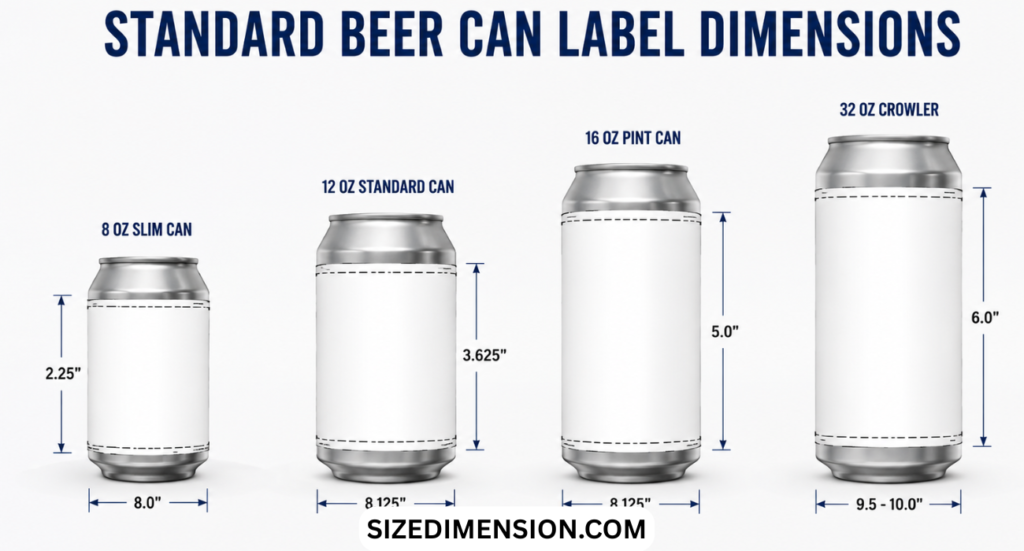
Most breweries in the United States rely on standard can label dimensions because they reduce production costs and work with nearly every commercial labeling machine.
The most common 12 oz beer can label measures 8.125 inches wide × 3.625 inches high. This size offers enough space for branding, required legal information, and attractive artwork while avoiding excessive overlap.
A 16 oz beer can label uses the same width but increases the height to 8.125 inches × 5 inches. The additional height provides more room for detailed graphics, brewing stories, tasting notes, and larger logos.
The table below shows the most common standard label dimensions used throughout the American brewing industry.
| Beer Can Size | Standard Label Size | Common Use |
| 8 oz Slim Can | 8″ × 2.25″ | Sample and session beers |
| 12 oz Standard | 8.125″ × 3.625″ | Most commercial beers |
| 16 oz Pint | 8.125″ × 5″ | Craft breweries |
| Crowler | 9.5–10″ × 6″ | Taproom fills |
Using these industry standards also helps reduce costs because many printers already stock these label specifications and cutting dies for commercial beer labels.
Specialty Sizes
Not every brewery uses traditional cans. Many brands now offer limited editions and specialty beverages using unique containers that require a specialty beer can label.
Slim cans have become increasingly popular for hard seltzers, light lagers, and low-calorie beverages. Their narrow diameter means the label wraps differently, requiring specially designed sleek can labels or slim can labels. These containers are taller but thinner than standard beer cans, giving designers a modern appearance while requiring custom beer can measurement.
Crowlers are much larger than ordinary cans and often hold 32 ounces. Because of their size, crowler label size requirements provide much more room for colorful branding, brewery stories, and seasonal artwork. These larger labels also benefit from stronger adhesive labels because they frequently experience condensation during transport.
Some breweries also produce limited-edition beverages in uniquely shaped aluminum containers. These custom can labels always require direct measurements rather than relying on industry standards.
Quick Size Comparison
The following table provides a quick comparison of the most popular beer can label sizes used in North America.
| Can Type | Width | Height | Typical Label Style |
| 8 oz Slim | 8″ | 2.25″ | Partial Wrap |
| 12 oz Standard | 8.125″ | 3.625″ | Full or Optimal Wrap |
| 16 oz Pint | 8.125″ | 5″ | Full Wrap |
| 32 oz Crowler | 9.5–10″ | 6″ | Full Wrap |
This simple can size comparison helps breweries choose suitable labels before beginning beer packaging design.
12 oz Beer Can Label Dimensions
The beer can label dimensions 12 oz remain the industry benchmark because 12-ounce cans dominate the American beer market. Most manufacturers recommend a width of 8.125 inches with a height of 3.625 inches, offering an excellent balance between branding and production efficiency.
These measurements work perfectly with almost every beer can template available from professional printers. Designers can easily include logos, ingredient lists, nutritional information, and the required government warning label without overcrowding the layout.
Most professional label printing companies also stock dies specifically designed for this standard beer can label size, reducing setup costs and shortening production time.
16 oz Beer Can Label Size and Height
The 16 oz beer can label size has become increasingly popular among American craft breweries. The additional height creates extra space for illustrations, larger branding, and detailed storytelling that helps breweries connect with customers.
Although the width remains 8.125 inches, the increased beer label height of 5 inches creates significantly more room for attractive beer can artwork. This larger space also simplifies beer branding, allowing designers to include QR codes, brewing information, tasting notes, and marketing messages without making the label feel crowded.
Unlike standard cans, pint cans often display more elaborate artwork, making them especially popular for seasonal releases and premium craft beer collections.
Specialty Beer Can Label Dimensions
Every specialty beer can label requires careful measurement because manufacturers often produce containers with different diameters and heights. Always verify your supplier’s measurements before ordering labels.
Whether you create labels for slim cans, sleek cans, or crowlers, accurate beer packaging measurements ensure the final product looks clean and professional. Using the correct beer label template also prevents costly mistakes during label production and helps every label fit perfectly.
The Science Behind Beer Can Label Measurements
Creating professional beer can label dimensions is more than choosing a nice design. Every measurement affects how well the label fits the can, how it looks on store shelves, and how smoothly it runs through a can labeling machine. Even a small mistake in width or height can create wrinkles, bubbles, or unwanted label overlap during can labeling.
Most breweries first measure the outside of the can before creating a beer can template. This ensures the beer can label size matches the exact container rather than relying only on general industry standards. Accurate label measurements also help designers position logos, text, and graphics where customers can easily see them. A properly sized label not only improves appearance but also reduces material waste and printing costs.
Another important factor is the label material itself. Different label material options stretch and shrink differently depending on temperature and humidity. This is why professional breweries always test sample labels before ordering thousands of custom beer labels. Small adjustments during the design stage can save significant money during full-scale beer label printing.
Understanding Can Diameter and Circumference
Every label begins with measuring the can diameter. The diameter tells you how wide the can is, while the beer can circumference tells you how far the label must wrap around the outside.
The most common formula for can circumference calculation is:
Circumference = Diameter × 3.1416 (π)
For example, a standard 211 can has a diameter of approximately 2.6875 inches. Multiplying this number by π gives a circumference of roughly 8.44 inches. However, the label itself is usually about 8.125 inches wide instead of covering the entire circumference. This leaves a small gap that prevents wrinkles and makes the finished package look cleaner.
Leaving a small opening between both ends also improves label application. Professional printers generally recommend a gap of about one-quarter inch because it allows the label to sit smoothly without overlapping.
The table below shows common can measurements.
| Can Type | Diameter | Circumference | Typical Label Width |
| Standard 211 Can | 2.6875 in | 8.44 in | 8.125 in |
| 207 Can | Approximately 2.44 in | Approximately 7.66 in | Varies by manufacturer |
| Slim Can | Smaller diameter | Smaller circumference | Custom size |
Understanding these numbers makes it much easier to build an accurate label size formula for every project.
The 207 vs 211 Can Dilemma
Many breweries became familiar with the difference between 207 can and 211 can sizes after supply shortages affected the beverage industry. Although both cans can hold similar volumes, they are not identical.
A 211 can is wider and slightly shorter, while a 207 can is narrower and taller. Because of these differences, the same beer can label dimensions cannot always be used for both containers.
If a label designed for a 211 can is applied to a 207 can, the artwork may appear stretched vertically or leave too much uncovered space. Logos may sit too high, text may lose balance, and important legal information could shift into awkward positions.
Before ordering commercial beer labels, always ask your can supplier which container size they manufacture. Confirming this information early allows your printer to prepare the correct beer can wrap, avoiding expensive reprints later.
Many professional printers now maintain separate templates for 207 and 211 containers to support modern craft brewery packaging.
Label Height Considerations for Different Beer Cans
Choosing the correct beer label height is just as important as selecting the proper width. A label that is too tall may touch the top rim or bottom edge of the can. A label that is too short leaves excessive aluminum exposed, reducing shelf appeal.
Designers usually leave a small margin above and below the label. This label safety margin helps protect the design during production and keeps the edges from lifting over time. It also improves durability when cans are stored in refrigerators or ice buckets.
Another important factor is can seam placement. Every aluminum can has a vertical seam where the metal joins together. Most designers position logos and important artwork away from this area because slight surface changes can affect printing appearance.
Legal information also requires careful planning. The TTB labeling requirements require breweries to include items such as the government warning label, brewery information, and sometimes the alcohol content label. These details should remain easy to read while fitting naturally within the available label space.
How to Calculate Beer Can Label Size for Your Specific Cans
Every brewery does not use exactly the same aluminum can. Even when two cans hold the same amount of beer, they may have different diameters or heights depending on the manufacturer. That is why you should always measure your own cans before ordering beer can labels. Accurate label measurements help reduce waste, improve print quality, and ensure the finished label fits perfectly.
Many breweries assume standard dimensions will work for every project, but this can lead to expensive mistakes. Measuring the can yourself allows you to create accurate can label dimensions, avoid label overlap, and produce a more professional-looking product. Whether you are making a few labels at home or ordering thousands through professional label printing, careful measuring is always the first step.
Read also: 13 Things with Pics That Are 80 Feet Long
Paper Template Method
One of the easiest ways to determine the correct beer can label size is by using a simple paper template. This method requires only a sheet of paper, scissors, tape, and a ruler, making it perfect for beginners and small breweries.
Wrap a piece of paper around the can until both ends almost meet. Trim the width until you leave a small gap between the ends. Then adjust the height until the paper sits neatly between the top and bottom edges without touching either rim. Once you are satisfied with the fit, remove the paper and measure its width and height using a ruler.
This method gives you an excellent starting point for creating your beer label template. It also allows you to check logo placement, text size, and overall balance before investing in label production. Many experienced designers still use this simple technique because it provides an accurate visual reference before digital design begins.
The paper method is especially useful when creating custom can labels for limited-edition releases or unusual can shapes.
Professional Measurement Techniques
Commercial breweries usually rely on more precise tools when determining beer can measurement. Digital calipers are commonly used because they measure the beer can diameter with excellent accuracy. Even a small difference of a few millimeters can affect the finished label.
Many breweries also request official measurements directly from their can manufacturers. These specifications include the can diameter, height, recommended beer can wrap, printable area, and other label specifications needed for professional production.
After the measurements are confirmed, designers create digital artwork using software such as Adobe Illustrator. The document includes the proper label bleed area, print safe area, and trim lines to ensure nothing important gets cut during production.
Professional printers usually ask customers to submit PDF print files with fonts outlined and images saved at high resolution. Most companies recommend 300 DPI labels because they produce sharp text and detailed graphics. Lower resolutions often appear blurry after printing, especially on detailed beer can artwork.
Working closely with your printer also ensures compatibility with digital label printing, offset printing, and other commercial printing methods. This step helps prevent costly revisions before the final order enters production.
Beer Can Label Dimensions Calculator Formula
If you want to calculate your own label size, you can use a simple mathematical formula.
Label Width = (Can Diameter × 3.1416) − Gap Allowance
For example, if your can diameter measures 2.6875 inches, the circumference is approximately 8.44 inches. After subtracting a gap of about 0.25 inch, the recommended label width becomes roughly 8.19 inches, which closely matches the common industry standard of 8.125 inches.
To determine the height, measure the printable area between the upper and lower edges of the can. Leave approximately 0.25 inch of space at both the top and bottom. This keeps the label from rubbing against the rim and improves long-term durability.
Many online label calculator tools perform these calculations automatically after entering the can diameter and desired gap. These calculators save time and reduce errors, especially when working with specialty beer can label projects or custom-sized containers.
Using a reliable label size formula also helps designers maintain consistency across different beer products. Whether producing standard lagers, seasonal releases, or premium craft beers, accurate calculations result in cleaner packaging and fewer printing issues.
Designing Within Your Beer Can Label Dimensions
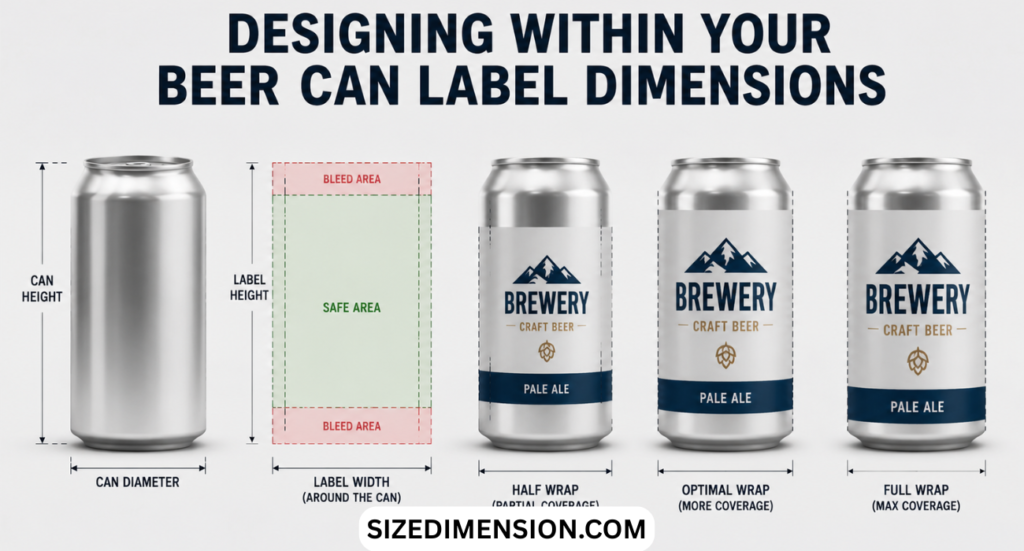
Once the measurements are complete, the next step is creating artwork that fits perfectly within the available space. A well-designed label not only looks attractive but also communicates your brand story and important product information.
Successful beer packaging design balances artwork, typography, legal information, and branding without making the label appear crowded. Designers should always work within the available dimensions instead of trying to fill every inch with graphics. Empty space can improve readability and make the overall design feel more professional.
How to Design a Beer Can Label That Fits Perfectly
Begin your design document using the exact beer can label dimensions plus the required label bleed. Most printers recommend adding 0.125 inch of bleed on every side to allow for trimming during production.
High-quality images are essential for professional results. Always use 300 DPI labels to ensure sharp printing. Lower-resolution images may look acceptable on a computer screen but often become blurry after printing.
Choose easy-to-read fonts and place your logo where customers will notice it first. Most breweries position their logo in the upper half of the label while placing product details and brewery information below it. This arrangement creates strong brewery branding and helps products stand out on crowded store shelves.
Maintaining proper spacing between text and edges is equally important. Keeping important information inside the print safe area prevents accidental trimming and ensures the finished label looks polished.
Design Elements and Beer Label Size Optimization
Good beer branding depends on more than attractive colors. Every design element should support readability and help customers quickly recognize your product.
Large logos, bold product names, and clear typography improve visibility from a distance. Many successful breweries also include illustrations, tasting notes, ingredient highlights, and QR codes that link customers to additional information.
Modern beer packaging often combines simple layouts with eye-catching can wrap design. Clean spacing, balanced typography, and attractive beer can artwork help customers remember your brand long after they finish the drink.
Choosing durable vinyl beer labels or paper beer labels also depends on where the product will be sold. Beers stored in coolers usually benefit from moisture-resistant labels and cold storage labels, while products displayed on retail shelves may perform well with standard paper materials.
Compliance Requirements Within Standard Label Dimensions
Every brewery selling beer in the United States must follow legal labeling rules in addition to creating attractive packaging. A beautiful design cannot replace proper beer label compliance, and failing to include required information may delay product approval or prevent beer from being sold.
The TTB labeling requirements issued by the Alcohol and Tobacco Tax and Trade Bureau require breweries to display important product details clearly. Most labels include the brewery name, product name, net contents, producer information, and the government warning label. Some products also require an alcohol content label, depending on state regulations and beer style.
Good designers plan these details before starting the artwork. Instead of squeezing legal information into the remaining space, they reserve an area within the standard beer can label from the beginning. This approach creates a clean appearance while ensuring all required text remains easy to read.
The table below summarizes the most common compliance elements.
| Label Requirement | Purpose |
| Government Warning | Federal legal requirement |
| Brewery Information | Identifies the producer |
| Product Name | Identifies the beverage |
| Net Contents | Displays beverage volume |
| Alcohol Content | Required where applicable |
| Barcode | Retail inventory management |
Following these guidelines helps breweries avoid redesigns and ensures their labels meet commercial printing standards.
Material Considerations for Beer Can Label Dimensions
Choosing the correct label material is just as important as selecting the correct size. The material affects durability, print quality, moisture resistance, and how well the label performs during label application.
Beer is often stored in refrigerators, coolers, and ice buckets where condensation forms quickly. Labels must remain firmly attached while keeping their colors bright and their edges smooth. High-quality materials improve the appearance of commercial beer packaging and help products maintain a premium look throughout distribution.
How Thick Are Labels?
Most beer labels range from 2 to 4 mils in label thickness, depending on the material selected. One mil equals one-thousandth of an inch, making even thicker labels flexible enough to wrap smoothly around aluminum cans.
Paper beer labels are generally thinner and more affordable. They produce excellent print quality and work well for products displayed in dry retail environments. However, paper labels may wear more quickly when exposed to heavy moisture.
Vinyl beer labels are slightly thicker and provide greater durability. They resist scratches, water, and fading, making them an excellent choice for breweries whose products spend long periods in refrigerated storage.
The table below compares common materials.
| Label Material | Average Thickness | Best Use |
| Paper | 2–3 mil | Retail shelves |
| Vinyl | 3.5–4 mil | Coolers and ice buckets |
| BOPP Film | 2–3 mil | Premium beer packaging |
| Polypropylene | 2–4 mil | Long-term durability |
Selecting the right material improves both appearance and performance while supporting consistent beer packaging measurements.
Adhesive Types and Dimensional Stability
The adhesive behind a label determines how securely it remains attached throughout shipping, storage, and customer use. Permanent adhesives are the most common choice because they maintain strong bonding even after long periods in refrigeration.
High-quality adhesive labels also resist shrinking and lifting when exposed to changing temperatures. Breweries distributing products nationwide often choose materials designed for cold environments because they perform better under refrigeration.
Premium moisture-resistant labels maintain their appearance despite condensation, while specialized cold storage labels continue adhering even after repeated cooling and warming cycles. These features reduce customer complaints and improve the overall perception of product quality.
Printing Your Beer Can Labels
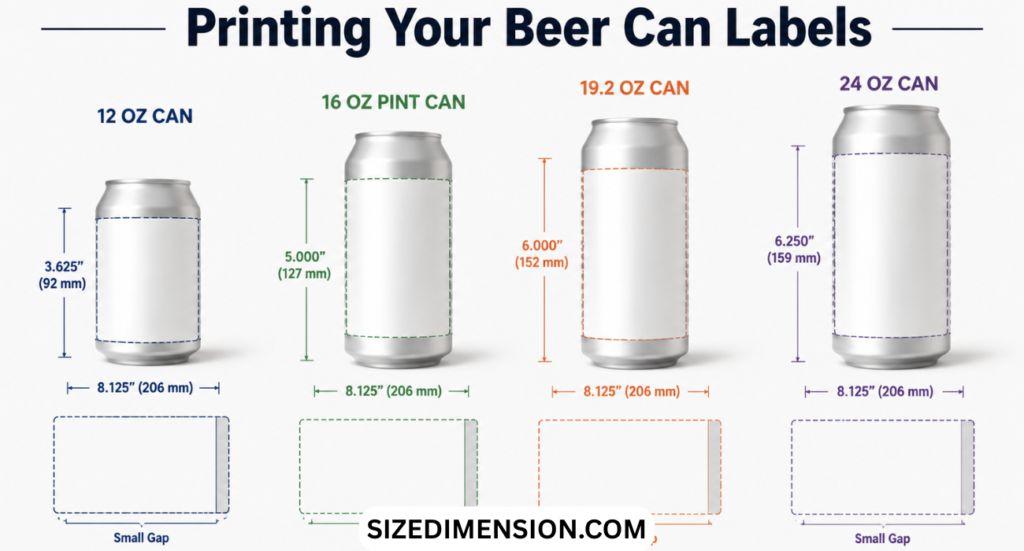
Once the design is complete, choosing the right printing method becomes the next important decision. The size of your order, your budget, and the level of detail in the artwork all influence which printing process works best.
Modern beer label printing offers excellent quality through both digital and traditional printing technologies. Small breweries often prefer digital methods because they require lower minimum orders, while larger companies frequently benefit from offset production for high-volume runs.
Can I Print My Own Labels at Home?
Many home brewers wonder if home label printing is a practical option. The answer is yes for small projects, but it has limitations.
Most desktop printers accept standard paper sizes that barely accommodate large beer labels. Although home printing works well for test batches or personal gifts, commercial-quality finishes usually require professional equipment.
Home printers also produce lower resolution than industrial presses, making small text and detailed illustrations less sharp. For breweries planning to sell products commercially, investing in professional printing generally provides better results.
Professional Printing Considerations for Beer Label Dimensions
Professional printers offer several production methods depending on the project size. Digital label printing is ideal for seasonal releases, limited editions, and short production runs because it requires little setup and supports quick changes.
Larger breweries often use offset printing for thousands of labels because it lowers the cost per unit while delivering consistent color quality. Professional printing companies also perform label die cut operations with precision, ensuring every label matches the required dimensions.
Many printers supply labels on rolls using a specific roll label configuration that works with an automatic label applicator. This system speeds production and reduces labeling errors during packaging.
What Is the Standard Label Size for Commercial Production?
Most commercial printers already stock dies for common label sizes, making production faster and more affordable.
The most widely used dimensions remain 8.125 × 3.625 inches for a standard 12 oz beer can label and 8.125 × 5 inches for a 16 oz beer can label. Using these standard sizes reduces setup charges and allows breweries to receive finished labels more quickly.
Because these measurements have become industry standards, they also provide excellent compatibility with nearly every commercial labeling system.
Beer Can Label Dimensions for Different Application Methods
The way labels are applied also influences the final dimensions. Small breweries often apply labels by hand, while larger facilities rely on automated equipment that requires precise spacing and alignment.
Hand Application Sizing Considerations
Hand-applied labels are ideal for small production runs because they allow breweries to label limited batches without expensive machinery. Operators should carefully align each label while maintaining consistent spacing around the can. Simple alignment guides help reduce wrinkles and improve the finished appearance.
Automatic Applicator Requirements
High-volume breweries typically use an automatic label applicator connected to a can labeling machine. These systems require consistent spacing between labels on the roll so sensors can detect each label accurately during production.
Correct measurements, reliable adhesives, and proper roll configuration allow machines to apply thousands of labels every hour with excellent consistency.
See also: 13 Things with Pictures That Are 20 Feet Long
FAQ’s
What is the size of a beer can label?
A standard beer can label for a 12 oz can typically measures 8.125 inches × 3.625 inches, while a 16 oz can usually uses 8.125 inches × 5 inches. These sizes fit most commercial beer cans in the USA.
What are the dimensions of a can of beer?
A standard 12 oz beer can is about 4.83 inches tall with a 2.6 to 2.7-inch diameter, while a 16 oz pint can is approximately 6.1 inches tall with a similar diameter.
What is the width and height of a label?
The standard beer label width is 8.125 inches, while the height is typically 3.625 inches for 12 oz cans and 5 inches for 16 oz cans, depending on the can size.
Can 330ml label size?
A 330ml (11.2 oz) beer can commonly uses a label measuring 8.125 inches × 3.5–3.625 inches, although the exact size may vary slightly depending on the can manufacturer.
Conclusion
Beer Can Label Dimensions: Size, Height (2026) helps you choose the correct label for every beer can. The right size improves your packaging and makes your product look neat and professional. Standard dimensions also make printing easier and reduce mistakes. Careful measuring, good design, and quality materials help you create labels that fit perfectly and attract more customers.
Always measure your can before ordering labels because small size differences can affect the final result. Beer Can Label Dimensions: Size, Height (2026) gives you the knowledge to design, print, and apply labels with confidence. Following these simple guidelines helps you save money, improve your brand, and create attractive beer cans that stand out on store shelves.